
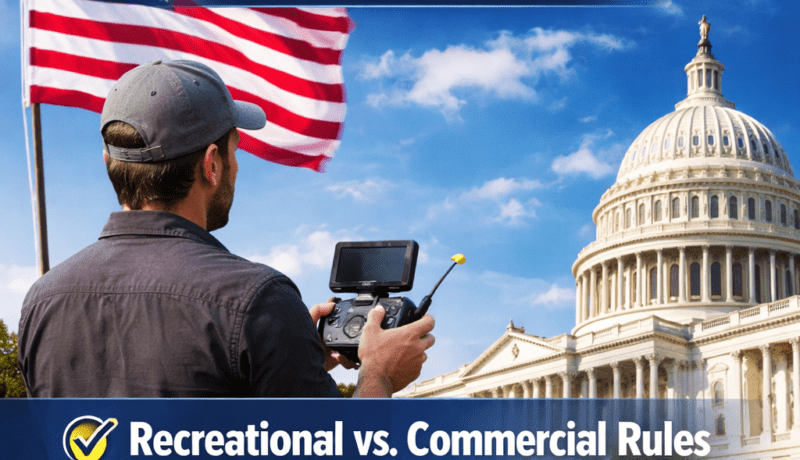

If you’re wondering about the drone license USA rules in 2026, let me make it simple for you right away: not everyone needs a license to fly a drone in the United States—but in many cases, you absolutely do.
Table Of Content
- Do You Need a Drone License in the USA? (Clear Answer for 2026)
- Recreational vs Commercial Drone Use (Most Important Rule)
- Recreational Drone Use (No License Required)
- Commercial Drone Use (License is Mandatory)
- Small Drones Under 250g (Big Misconception)
- Common Beginner Mistake (Avoid This Early)
- Quick Rule Summary (Remember This Before You Fly)
- What Is the FAA Part 107 License? (Drone License USA Explained)
- What Does Part 107 Allow You to Do?
- What Part 107 Does NOT Allow (Important Limitations)
- Who Should Get a Drone License?
- Do You Need Part 107 as a Beginner?
- Why the FAA Requires This License
- How to Get a Drone License in the USA (Beginner-Friendly Guide 2026)
- Step 1 – Check Basic Eligibility
- Step 2 – Study for the FAA Part 107 Test
- Step 3 – Create Your FAA Account (FTN Number)
- Step 4 – Schedule the Part 107 Exam
- Step 5 – Take and Pass the Test
- Step 6 – Apply for Your License
- How Long Does It Take to Get Licensed?
- Drone License Cost in the USA
- Beginner Tip (Important)
- Quick Recap (Simple Checklist)
- Drone License USA – Key Takeaways for 2026
- Next Steps for Beginners
- Affiliate-Friendly Advice
I’ve seen beginners get confused here, especially when they just bought their first drone and want to start flying immediately. The problem is, if you don’t understand the difference between recreational flying and commercial use, you can easily break FAA rules without even realizing it.
Before you fly anything, I strongly recommend you understand the basic laws first. I’ve already explained everything in detail in my guide on drone laws in the USA, so if you’re completely new, read that alongside this.
Now, if you’re just starting and still deciding which drone to buy, you should also check my beginner-friendly recommendations like best budget drones for beginners, because some drones don’t even require registration—this changes things a lot.
In this guide, I’ll walk you step-by-step through:
- When you need a drone license
- When you don’t
- What the FAA actually requires
- How beginners can stay 100% legal
Let’s break this down clearly so you don’t make a mistake that could cost you fines—or worse, a ban.
Do You Need a Drone License in the USA? (Clear Answer for 2026)
When people search for drone license USA, they usually want a direct answer — so let me give it to you straight based on real FAA rules.
👉 You only need a drone license in the USA if you are flying for commercial purposes.
If you’re flying just for fun, you don’t need a license — but that does NOT mean you can ignore the rules.
I’ve seen many beginners misunderstand this and end up violating regulations without even knowing. So before you fly, make sure you fully understand the basics from my detailed guide on drone laws in the USA, because that’s where most mistakes happen.
Recreational vs Commercial Drone Use (Most Important Rule)
This is the single most important concept you need to understand before flying any drone in the USA.
Recreational Drone Use (No License Required)
You do NOT need a license if:
- You are flying only for fun
- No business or income is involved
- You are not promoting any service or brand
- You’re capturing personal photos/videos
But here’s what I always tell beginners:
👉 Just because you don’t need a license doesn’t mean you’re free from rules.
You still must:
- Pass the TRUST test (FAA requirement)
- Follow safety guidelines
- Stay within legal airspace limits
If you skip these, you can still face penalties.
If you’re just starting out, I recommend going through beginner-friendly options like best budget drones for beginners, because these are easier to control and safer while you’re still learning the rules.
Commercial Drone Use (License is Mandatory)
Now let’s talk about when the drone license USA requirement becomes serious.
You MUST get a license (FAA Part 107) if:
- You are earning money using a drone
- You’re creating monetized YouTube content
- You’re doing real estate or client shoots
- You’re offering drone services
Even if you think “it’s just a small project,” FAA doesn’t see it that way.
👉 If money, promotion, or business is involved → you need a license.
If your goal is content creation, I suggest checking drones for videos and photos so you choose equipment that actually fits professional use and justifies getting licensed.
Small Drones Under 250g (Big Misconception)
A lot of beginners think small drones mean fewer rules. That’s only partially true.
Here’s the reality:
- Under 250g → Usually no registration required
- BUT → License rules still apply based on usage
👉 Example:
- Flying a small drone for fun → No license
- Using the same drone for paid work → License required
So don’t rely on weight to avoid legal requirements.
If you want safe and beginner-friendly compact options, I personally recommend exploring best foldable drones for beginners, because they’re easier to manage and travel with.
Common Beginner Mistake (Avoid This Early)
Let me be honest — this is where most people go wrong.
They:
- Buy a cheap drone from guides like best drones under 100
- Start recording videos
- Upload on YouTube
- Turn on monetization
And they think everything is fine.
👉 It’s not.
The moment your content generates income, you are considered a commercial operator under FAA rules.
Do this instead:
- Decide your goal before flying
- If there’s any chance of earning → prepare for Part 107
Otherwise, you risk:
- FAA fines
- Legal issues
- Platform-related problems
Quick Rule Summary (Remember This Before You Fly)
- Flying for fun → No license required
- Flying for money → License required
- Drone weight → Does NOT change license requirement
- Safety rules → Always apply
What Is the FAA Part 107 License? (Drone License USA Explained)
Now that you understand when a drone license USA is required, let me explain what that license actually is.
The official name is:
FAA Part 107 Remote Pilot Certificate
This is the license issued by the Federal Aviation Administration (FAA) that allows you to legally fly a drone for commercial purposes in the United States.
In simple words, this is what turns you from a hobbyist into a legal drone operator for business use.
What Does Part 107 Allow You to Do?
Once you get the Part 107 license, you can legally:
- Earn money using your drone
- Offer freelance drone services
- Shoot real estate, events, or commercial content
- Create monetized YouTube videos
- Work with brands and clients
Without this license, doing any of the above is a violation of FAA rules.
If your goal is to enter content creation or client work, I recommend exploring tools from my guide on best drones for YouTube videos, because those are built for professional-level output.
What Part 107 Does NOT Allow (Important Limitations)
Many beginners think that getting a license means full freedom. That’s not true.
Even with Part 107, you must still follow rules like:
- Flying below 400 feet
- Keeping your drone within visual line of sight
- Avoiding restricted airspace
- Not flying over people (in most cases)
These rules are part of broader regulations that I’ve already explained in detail in my drone laws in the USA guide, so make sure you understand them alongside licensing.
Who Should Get a Drone License?
From my experience, you should seriously consider getting a Part 107 license if:
- You want to make money with drones
- You plan to start a YouTube channel
- You are entering real estate photography
- You want to build a drone-based side hustle
Even if you are just starting, planning ahead saves you time later.
For example, if you’re building toward professional work, don’t waste time on low-end drones. Instead, explore options from best drones under 300 or higher categories that can actually support commercial-quality output.
Do You Need Part 107 as a Beginner?
Here’s my honest advice:
- If you’re just learning and flying for fun → No need right now
- If you’re serious about content or income → Start preparing early
I’ve seen many beginners delay this step, and later they struggle when they want to scale.
Do this instead:
- Learn flying basics first
- Understand laws
- Then move toward licensing when needed
Why the FAA Requires This License
The FAA introduced Part 107 for one main reason:
Safety and accountability
Drones share airspace with:
- Aircraft
- Helicopters
- Emergency services
Without proper knowledge, you can create serious risks.
That’s why even though drones are easy to buy, flying them commercially requires responsibility and certification.
How to Get a Drone License in the USA (Beginner-Friendly Guide 2026)
Now that you understand what the drone license USA (Part 107) is, let me walk you through the exact process to get it.
I’ll keep this simple and practical so you can actually follow it without confusion.
Step 1 – Check Basic Eligibility
Before anything, make sure you meet these requirements:
- At least 16 years old
- Able to read, write, and understand English
- Physically and mentally fit to operate a drone safely
If you meet these, you’re good to move forward.
Step 2 – Study for the FAA Part 107 Test
This is where most beginners get nervous, but honestly, it’s not that difficult if you prepare properly.
The test includes topics like:
- Airspace rules
- Weather basics
- Drone operations
- FAA regulations
- Safety procedures
I always suggest beginners first understand real-world flying before diving deep into theory. If you haven’t flown yet, start with something simple from best budget drones for beginners so concepts make more sense while studying.
Do this:
- Study consistently for a few days
- Focus on understanding, not memorizing
Step 3 – Create Your FAA Account (FTN Number)
You need to register on the FAA system (IACRA) to get your FTN (FAA Tracking Number).
This number is required to:
- Book your exam
- Track your certification
It’s a simple process and only takes a few minutes.
Step 4 – Schedule the Part 107 Exam
You’ll need to book your test through an FAA-approved testing center.
Key details:
- Test format: Multiple choice
- Total questions: 60
- Passing score: 70%
- Time: حوالي 2 hours
Cost:
- Around $175 (may vary slightly)
Step 5 – Take and Pass the Test
On test day:
- Bring valid ID
- Arrive early
- Stay calm and focused
If you’ve prepared properly, passing is very achievable.
Step 6 – Apply for Your License
Once you pass:
- Go back to the FAA portal
- Submit your application
- Complete a background check
After approval, you’ll receive your Remote Pilot Certificate.
How Long Does It Take to Get Licensed?
From my experience, the full process usually takes:
- Preparation: 1–2 weeks
- Scheduling + test: few days
- License approval: 1–2 weeks
So overall, you can become a certified drone pilot in about 2–4 weeks.
Drone License Cost in the USA
Let’s keep it real:
- Exam fee: around $175
- Study materials: optional (free to paid)
That’s it.
There are no hidden costs if you prepare smartly.
Beginner Tip (Important)
Don’t rush into the license without understanding practical flying.
I’ve seen people pass the exam but struggle in real situations.
Do this instead:
- Learn basic flying first
- Understand rules from my drone laws in the USA guide
- Then go for certification
This approach saves time and builds real confidence.
Quick Recap (Simple Checklist)
- Meet eligibility
- Study FAA material
- Get FTN number
- Book exam
- Pass test
- Apply for license
Drone License USA – Key Takeaways for 2026
By now, you understand the essentials of drone license USA rules:
- Recreational flying → No license needed, but TRUST test and FAA rules still apply
- Commercial flying → Part 107 license is mandatory
- Drones under 250g → Weight does not remove license requirements for commercial use
- Safety and compliance are non-negotiable; skipping these can lead to fines or legal issues
From my experience, beginners often underestimate the importance of understanding FAA regulations before flying. Following the rules from the start will save you both time and money while keeping your drone activities completely legal.
Next Steps for Beginners
If you’re just starting:
- Start flying safely with beginner-friendly drones like those in my guide on best budget drones for beginners.
- Study FAA regulations thoroughly via my drone laws in the USA guide.
- Plan ahead: If you intend to monetize your drone activities, prepare early for the Part 107 exam.
Affiliate-Friendly Advice
If you’re ready to take action and buy your first drone legally, I recommend checking my curated selection of drones suitable for both beginners and aspiring commercial pilots:
These drones are beginner-friendly, FAA-compliant, and perfect for safely learning to fly while staying within the rules.
By following this guide, you now have a clear roadmap for 2026 to legally fly drones, avoid fines, and even scale into commercial work safely. This post also acts as a central authority resource on your site, supporting all drone-related content for beginners and professionals alike.
Remember: Flying legally isn’t just about rules — it’s about building a strong foundation for your drone journey in the USA.



No Comment! Be the first one.