
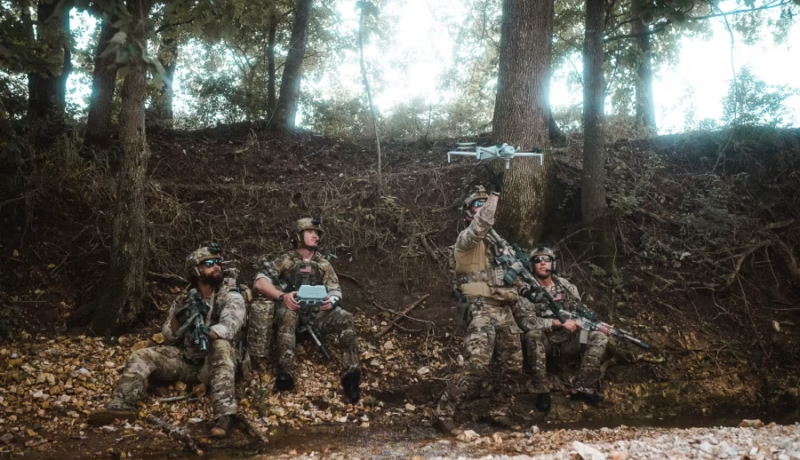
US Army Places $52M Skydio X10D Drone Order in 2026 – What It Means for Military Drone Technology

The Skydio X10D Army order is making headlines in 2026 as the U.S. Army confirms a massive $52 million deal for more than 2,500 drones. This marks the largest single-vendor small drone procurement in Army history, and what’s even more surprising is how fast the decision was made — moving from bid to award in under 72 hours.
Table Of Content
- What Happened
- About Skydio X10D
- Why This Order Matters
- 1. Speed of Procurement
- 2. Scale and Deployability
- 3. National Security and American-Made Advantage
- 4. Industry Implications
- War Context
- American vs DJI Angle
- Cost Comparison
- What This Means for Drone Industry
- Frequently Asked Questions
- What is the Skydio X10D Army order?
- How fast was the order processed?
- What makes the Skydio X10D different from other drones?
- Why is American-made drone production important?
- What does this order mean for the drone industry?
- Conclusion + CTA
At a time when drone usage is rapidly evolving in modern warfare, this move clearly signals a shift toward scalable, deployable, and AI-powered systems. If you’ve been following recent updates around drone laws in the USA or industry changes like the DJI drones ban, you’ll notice a strong push toward American-made drone solutions.
In this article, I’ll break down what this deal actually means, what makes the Skydio X10D different, and why this news matters not just for the military — but for the future of the drone industry as a whole.
What Happened
The Skydio X10D Army order is officially valued at more than $52 million, with the U.S. Army purchasing over 2,500 units of this advanced small drone system. According to the announcement, this is the largest single-vendor procurement of small unmanned aircraft systems in the Army’s history.
What really stands out to me here is the speed of execution. The entire process — from bid to final award — was completed in less than 72 hours. That’s extremely fast compared to traditional military procurement timelines, which usually take months or even years. This alone tells you how urgent the demand for small, deployable drones has become.
The order is part of the Army’s Short Range Reconnaissance (SRR) program, where the goal is to equip ground units with lightweight, fast-deploying drones that can provide real-time intelligence in the field. With this deal, Skydio now becomes the only manufacturer to support both Tranche 1 and Tranche 2 phases of the program.
This announcement also comes during an active period of military operations involving the U.S., where drones are playing a central role on both sides. That context matters, because it explains why the Army is prioritizing speed, scale, and reliability over long procurement cycles.
If you’ve been following how drone regulations and deployments are evolving through guides like drone laws in the USA, you’ll notice a similar pattern — drones are no longer optional tools, they are becoming a core part of modern operations.
About Skydio X10D
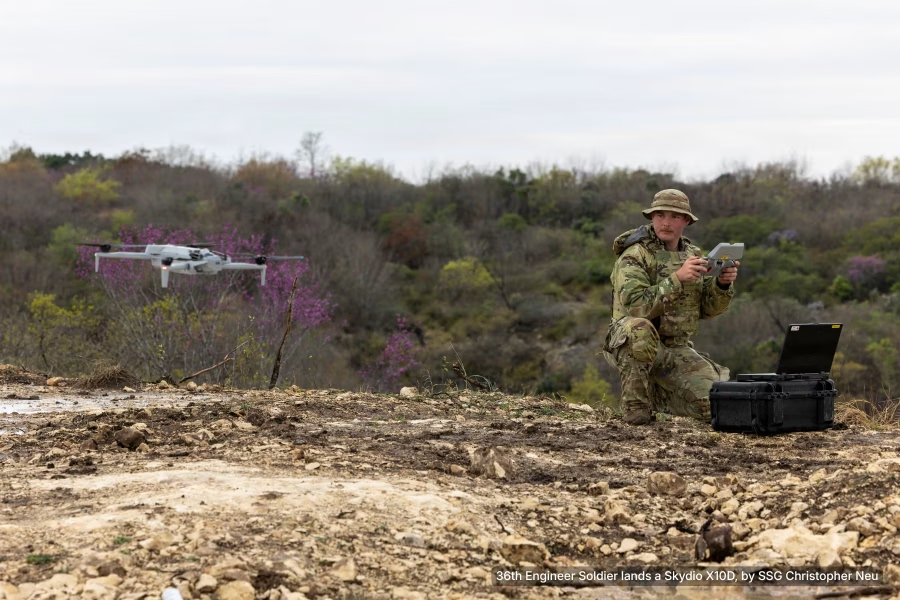
The Skydio X10D is the military variant of Skydio’s X10 drone, purpose-built for Intelligence, Surveillance, and Reconnaissance (ISR) missions at the platoon level. Unlike strike drones, the X10D is designed to give soldiers “eyes in the sky” quickly and reliably.
Here’s what makes it stand out:
- 48-Megapixel Telephoto Camera: Captures high-resolution images for reconnaissance and mapping.
- Thermal Imaging: Equipped with a Teledyne FLIR Boson+ sensor for night operations or low-visibility conditions.
- AI Navigation Without GPS: Even in electronically jammed environments, the X10D can autonomously navigate terrain.
- Rucksack-Portable & Rapid Deployment: Soldiers can carry it easily and deploy it within minutes.
- American-Made: Every unit is manufactured at Skydio’s facility in Hayward, California, ensuring compliance with national security requirements.
For beginners or anyone following military drone tech, the X10D is essentially a compact, smart, and highly deployable aerial reconnaissance tool. It’s built for practical use on the ground, not just as a high-tech gadget.
Skydio has positioned the X10D as the go-to American-made alternative to foreign drones like DJI, which has faced restrictions in the U.S. defense sector. This aligns with broader trends you can read about in DJI drones ban coverage.
Why This Order Matters
The Skydio X10D Army order is significant not just for its size, but for what it represents in modern military and drone strategy.
1. Speed of Procurement
Completing a $52 million order for 2,500 drones in under 72 hours is unprecedented. Traditional military procurement can take months, even years. This rapid turnaround shows that the U.S. Army is prioritizing operational readiness and small drone deployment over conventional timelines, signaling a shift in how quickly defense technology can be adopted.
2. Scale and Deployability
Buying drones at this scale emphasizes the Army’s need for widely deployable, platoon-level ISR assets. Small, intelligent drones like the X10D allow units to gather real-time intelligence, conduct reconnaissance, and monitor hostile areas without risking soldiers directly.
3. National Security and American-Made Advantage
Every Skydio X10D comes from California, making it fully American-made. This is critical given national security concerns and recent restrictions on foreign drone manufacturers. Being on the Blue UAS Cleared List means these drones are vetted and NDAA-compliant, giving the U.S. military confidence in supply chain integrity.
4. Industry Implications
This order underscores a broader trend: small drones are permanently changing how wars are fought. The countries that can produce, deploy, and scale drones efficiently—not just build the most sophisticated single units—will hold an advantage. For the drone industry in the USA, this creates opportunities for both defense contractors and civilian applications, as advanced technologies trickle down to commercial and consumer drones.
For anyone following the drone market, this is a clear signal: AI-enabled, deployable drones are no longer niche technology—they are essential tools for modern operations. You can also see connections to civilian drone improvements, which benefit from advancements in AI navigation and thermal imaging.
War Context
The Skydio X10D Army order comes at a time of active military operations involving the U.S., highlighting how small drones are increasingly central to modern conflict. Since late February 2026, U.S. and allied forces have been engaged in operations where unmanned systems play a key role in reconnaissance and surveillance.
It’s important to note that the X10D is not a strike drone. Unlike systems such as the LUCAS drone — a one-way attack system used in recent operations — the X10D is focused purely on intelligence gathering. This distinction ensures that readers understand the order is about enhancing situational awareness and battlefield intelligence, not offensive capability.
Even in contested environments where GPS signals may be jammed, the X10D’s onboard AI allows autonomous navigation, giving troops reliable real-time data. For context, small drones have increasingly influenced strategy across conflicts worldwide, but the U.S. Army’s rapid procurement demonstrates a shift toward speed, scalability, and operational readiness that traditional aircraft cannot match.
By situating this news within the broader operational landscape, it becomes clear that small drones are not just tools—they are now integral assets for real-time tactical decision-making.
American vs DJI Angle
The Skydio X10D Army order highlights a major shift toward American-made drones in U.S. defense procurement. With national security concerns rising, reliance on foreign manufacturers like DJI has become limited due to data and compliance risks. Every X10D is built in Hayward, California, ensuring that the U.S. Army receives fully vetted, NDAA-compliant systems.
Being on the Blue UAS Cleared List means Skydio drones meet all Department of Defense requirements for sensitive operations. Skydio actually holds more entries on the Select List than any other manufacturer, which gives it a strategic advantage over DJI and other foreign competitors.
This trend is not only about security—it also impacts the drone market in the U.S. Civilian and commercial drones benefit from the same AI, thermal imaging, and GPS-free navigation technologies developed for the X10D. For more official context on DoD-approved drones, you can refer to the U.S. Department of Defense drone programs page or Skydio’s official site.
Cost Comparison
Another interesting angle of the Skydio X10D Army order is the cost perspective. At roughly $20,800 per unit, the Army is able to deploy thousands of drones at a fraction of the cost of traditional military aircraft. For context, a single F-35 fighter jet costs over $80 million — more than 3,800 times the cost of a single X10D.
This cost efficiency allows the Army to scale ISR capabilities without compromising operational readiness. Small, AI-powered drones like the X10D are affordable, quickly deployable, and highly effective, making them a smarter investment in the age of rapid tactical response.
From an industry perspective, these kinds of orders also indicate that the U.S. is seriously prioritizing domestic drone production, creating opportunities for contractors and indirectly pushing innovation in civilian drone technology. Drone enthusiasts and professionals alike can expect to see technologies developed for the X10D gradually appear in consumer and commercial drones.
What This Means for Drone Industry
The Skydio X10D Army order is a clear signal that small, intelligent drones are becoming central to both military and civilian sectors. While the order is military-focused, the technologies developed for ISR operations—AI navigation without GPS, thermal imaging, and rapid deployment—will inevitably influence the commercial drone market.
For U.S.-based drone manufacturers, this development creates opportunities to innovate and scale. Companies that can deliver reliable, American-made, AI-powered drones at volume will gain a competitive advantage in both defense and commercial sectors. For drone enthusiasts, photographers, and content creators, this means faster adoption of advanced features previously exclusive to military drones.
Additionally, the rapid procurement demonstrates that speed and scalability are now as critical as sophistication. The Army’s need for 2,500 drones in under 72 hours highlights how drones are no longer optional tools—they are essential assets for real-time decision-making. This trend will likely push research and development in areas like AI-driven autonomous flight, obstacle avoidance, and efficient battery management.
Readers interested in practical drone tech can explore drones for videos and photos
Those curious about regulations may refer to drone laws in the USA
Drone performance details: drones with long battery life
Official Skydio press release: Skydio Press
Department of Defense drone procurement info: DoD News Releases
Frequently Asked Questions
What is the Skydio X10D Army order?
The Skydio X10D Army order refers to the U.S. Army’s $52 million procurement of over 2,500 X10D drones in 2026, marking the largest single-vendor small drone purchase in Army history.
How fast was the order processed?
The entire order was approved and awarded in under 72 hours, demonstrating the Army’s need for rapid deployment of ISR drones.
What makes the Skydio X10D different from other drones?
The X10D is an ISR drone with AI navigation that works without GPS, thermal imaging capabilities, a 48MP telephoto camera, and is rucksack-portable for platoon-level deployment.
Why is American-made drone production important?
American-made drones like the X10D ensure NDAA compliance, national security, and reliable supply chains. This reduces reliance on foreign manufacturers like DJI.
What does this order mean for the drone industry?
This Skydio X10D Army order signals growing demand for AI-powered, deployable drones, impacting both military procurement and commercial drone innovation in the U.S.
Conclusion + CTA
The Skydio X10D Army order marks a major milestone in U.S. drone procurement, demonstrating how small, intelligent, and American-made drones are reshaping military operations. With over 2,500 units ordered at a rapid pace, the Army is signaling a clear commitment to scalable, deployable, and AI-powered ISR technology.
For enthusiasts, industry professionals, and content creators, this news highlights the future direction of drone technology — faster deployment, smarter AI, and greater focus on domestic manufacturing. If you’re looking to stay informed about advanced drones, understand how military innovations influence civilian models, or explore buying options for AI-enabled drones, now is the perfect time to follow these trends.
Learn about drone regulations and safe flying practices: Drone Laws in the USA Compare Skydio drones to consumer alternatives: Best Drones for Videos & Photos Explore long-lasting drones with smart features: Drones with Long Battery LifeThe rapid procurement of the Skydio X10D Army order also reinforces the importance of American innovation in drones, signaling to manufacturers and enthusiasts alike that scalability, AI integration, and reliability will define the next era of drone technology. Stay updated, stay informed, and consider how these advances might influence both military and civilian drone applications.


No Comment! Be the first one.