Drone Insurance Requirements USA (FAA Explained)

Drone Insurance Requirements USA: FAA Rules Explained for Beginners
If you’re flying a drone in the United States, one question comes up quickly: are there any official drone insurance requirements in USA? Many beginners assume insurance is mandatory because of strict aviation rules. Others ignore it completely, thinking it’s optional.
The truth sits somewhere in between. The FAA has clear regulations for drone operations—but insurance is not always legally required. However, that doesn’t mean you should ignore it.

This guide breaks down FAA rules, legal requirements, and what insurance actually means for you as a drone pilot. By the end, you’ll know exactly what’s required—and what’s simply smart to have.
What Are Drone Insurance Requirements in USA?
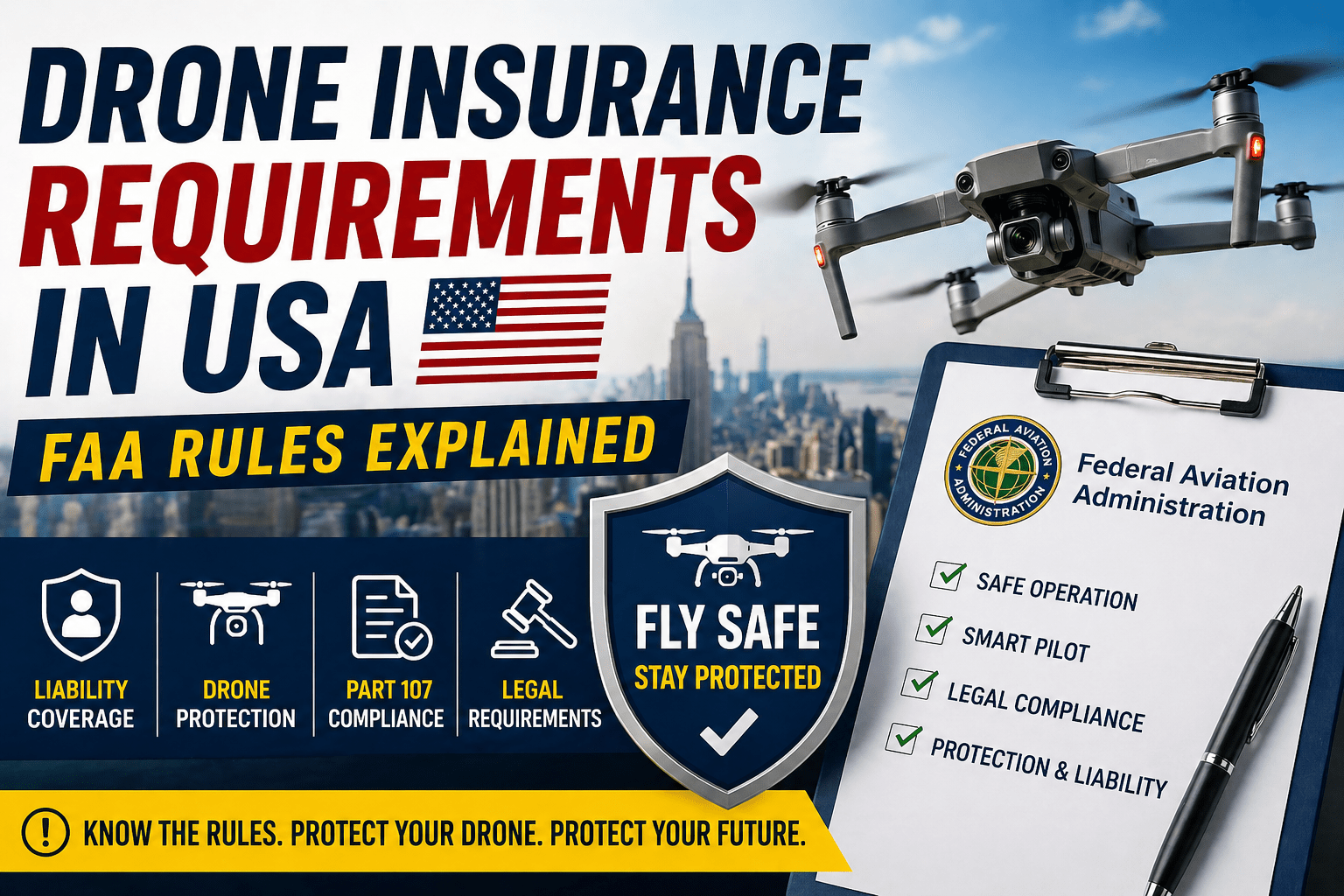
Let’s start with a clear answer: there are no federal drone insurance requirements in USA under FAA regulations.
The Federal Aviation Administration (FAA) focuses on safety, airspace rules, and pilot certification—but it does not legally require drone insurance for most operators.
That said, this doesn’t mean you’re free from responsibility. If your drone causes damage or injury, you are personally liable for the cost.
Here’s why it matters: even though insurance isn’t mandatory, the financial risk is very real.
FAA Drone Rules vs Insurance: What’s Actually Required?
The FAA regulates how you fly—not how you protect yourself financially.
Some key FAA requirements include:
- Register your drone (if required)
- Follow airspace restrictions
- Maintain visual line of sight
- Pass the TRUST test (for recreational users)
- Get Part 107 certification (for commercial use)
Notice something? Insurance is not listed. That’s because FAA rules are about safety compliance, not financial protection.
If you want a complete breakdown of how insurance works alongside these rules, read this guide: Drone Insurance Guide 2026
Why Drone Insurance Still Matters in the USA
Even without legal requirements, drone insurance plays a critical role—especially in the USA where liability laws can be strict.
Here’s why most experienced drone pilots choose to get insured:
- Accidents can lead to costly property damage
- Injury claims can result in lawsuits
- Drone repairs are often expensive
- Clients may require proof of insurance
For example, if your drone crashes into a parked car, you could be responsible for repair costs. If someone gets injured, the financial impact could be much higher.
That’s why many pilots treat insurance as essential—even if it’s not legally required.
Beginner Perspective: Do You Need Insurance Right Away?
If you’re just starting out, it’s normal to feel unsure about insurance.
Here’s a simple way to look at it:
- If you fly occasionally in open areas → Insurance is optional
- If you fly in public or urban spaces → Insurance is recommended
- If you plan to earn money → Insurance becomes essential
Also, if you’re still learning and choosing your first drone, this guide can help you get started: Best Budget Drones for Beginners
And if you want to understand how insurance compares with manufacturer protection plans, read: Drone Insurance vs DJI Care
Now that you understand the legal side, let’s go deeper into different types of coverage, Part 107 requirements, and how insurance fits into real-world drone use.
FAA Rules, Part 107 Insurance, and Coverage Options Explained
Now that we’ve clarified that drone insurance requirements in USA are not mandatory under federal law, let’s explore how insurance actually fits into FAA regulations—especially for commercial drone pilots.
Part 107 Insurance: Is It Required?
If you’re flying under Part 107 (commercial drone operations), you might expect insurance to be required. Surprisingly, it’s still not legally mandatory.
However, here’s the key difference: while the FAA doesn’t require insurance, most clients, companies, and contracts do.
For example:
- Real estate agencies often require liability coverage
- Construction projects demand insured operators
- Event organizers won’t hire uninsured pilots
This means that in practice, Part 107 insurance becomes essential for earning income.
To understand commercial coverage in detail, check this guide: Drone Insurance for Business
Types of Drone Insurance in the USA
Drone insurance in the USA typically comes in a few key forms. Each serves a different purpose.
- Liability Insurance
Covers damage to people or property. This is the most important type. - Hull Insurance
Covers damage to your own drone. - On-Demand Insurance
Short-term coverage for specific flights or projects.
For most users, liability coverage is the priority. It protects you from the biggest financial risks.
Cost of Drone Insurance in the USA
Pricing varies depending on how you use your drone.
- Recreational users: $50–$150/year
- Advanced hobbyists: $150–$300/year
- Commercial pilots: $500+ annually
Factors that affect cost include:
- Drone value
- Flight frequency
- Location (urban vs rural)
- Coverage limits
For a detailed breakdown, visit: Drone Insurance Cost 2026
FAA Guidelines and Safety Responsibility
The FAA emphasizes safe operation rather than financial protection. You can review official rules here: FAA Drone Regulations
But here’s the important part: if you violate rules or cause damage, the FAA won’t cover your costs. That responsibility falls entirely on you.
This is why insurance becomes a practical necessity—even if it’s not written into law.
Now let’s move to the final part—where we break down expert tips, mistakes to avoid, and how to make the right decision.
Expert Tips, Legal Risks, and Final Decision Guide
Understanding drone insurance requirements in USA is one thing. Making the right decision is another. This final section helps you avoid mistakes and choose the best approach based on your needs.
Common Mistakes Drone Pilots Make
Even experienced pilots sometimes overlook important details. Here are the most common mistakes.
- Assuming insurance is required by law
It’s not—but that doesn’t mean it’s unnecessary. - Ignoring liability coverage
This is the biggest financial risk. - Flying uninsured in high-risk areas
Urban environments increase potential damage. - Not planning for commercial use
Many opportunities require insurance proof.
Legal Risks Without Drone Insurance
Flying without insurance is legal—but risky.
Here’s what can happen:
- You pay out-of-pocket for property damage
- You face liability claims or lawsuits
- You lose business opportunities
In the USA, even a minor accident can lead to high costs. That’s why insurance is often considered a safety net rather than a legal requirement.
Decision Guide: What Should You Do?
Use this simple framework:
- Recreational beginner → Optional but recommended
- Frequent flyer → Get liability coverage
- Commercial pilot → Insurance is essential
- High-value drone → Add full coverage
This approach ensures you stay protected without overspending.
Final Verdict: Drone Insurance in the USA
So, what’s the final answer?
Drone insurance is not legally required in the USA—but it is strongly recommended for most users.
Whether you’re a beginner or a professional, the risks are real. And in many cases, insurance is the difference between a small mistake and a major financial problem.
FAQs: Drone Insurance Requirements USA
Is drone insurance required by the FAA?
No, the FAA does not require drone insurance for recreational or commercial pilots.
Do Part 107 pilots need insurance?
Not legally, but most clients require it for commercial work.
What is the minimum drone insurance in the USA?
There is no legal minimum, but liability coverage is highly recommended.
Can I fly a drone without insurance?
Yes, but you are fully responsible for any damages or injuries caused.
How much liability coverage should I get?
Most pilots choose $500,000 to $1 million depending on risk level.
Is drone insurance worth it in the USA?
Yes, especially for frequent flyers or anyone using drones professionally.