
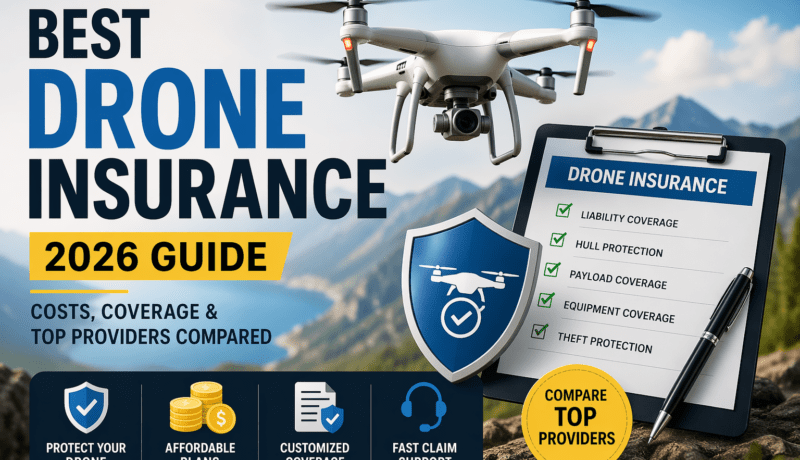

Best Drone Insurance Companies: Compare Coverage, Costs & Top Providers
If you fly a drone, whether for fun or business, one thing is certain: things can go wrong when you least expect it. A sudden signal loss, a strong gust of wind, or even a small pilot mistake can lead to serious damage. That is where drone insurance becomes essential.
Table Of Content
- Best Drone Insurance Companies: Compare Coverage, Costs & Top Providers
- Why Drone Insurance Matters More Than Ever
- Best Drone Insurance Companies in 2026
- BWI Aviation: Best for Commercial Drone Pilots
- SkyWatch: Best for On-Demand Coverage
- AutoPylot: Best for Annual Plans
- Avion Insurance: Best for Hobbyists and Flexible Options
- What Drone Insurance Typically Covers
- Types of Drone Insurance Coverage Explained
- Liability Insurance
- Hull Insurance (Drone Damage Coverage)
- Payload Coverage
- Ground Equipment Coverage
- Additional Coverage Options
- How Much Does Drone Insurance Cost in 2026?
- Average Pricing Overview
- Key Factors That Affect Pricing
- What Drone Insurance Does Not Cover
- What Drone Insurance Does Not Cover
- How to Choose the Best Drone Insurance Policy
- Best Drone Insurance Providers in 2026
- Common Drone Insurance Mistakes to Avoid
- Conclusion: Protect Your Drone Investment the Right Way
- Drone Insurance FAQs (2026)
From expensive repairs to third-party liability claims, the costs can quickly add up. A single accident could cost thousands of dollars, especially if your drone damages property or injures someone. Drone insurance helps protect both your equipment and your finances, making it a smart investment for every pilot.
If you are still exploring drone options, you can check our guide on best budget drones for beginners to understand how different drones fit different use cases before choosing insurance.
Why Drone Insurance Matters More Than Ever
The drone industry is growing rapidly, with more professionals using UAVs for photography, mapping, construction, agriculture, and inspections. As usage increases, so does the risk.
Even experienced pilots are not immune to accidents. A drone can lose GPS connection, crash due to battery failure, or collide with buildings and vehicles. Without insurance, you are responsible for all damages out of your own pocket.
According to the Federal Aviation Administration (FAA), drone operators are fully responsible for safe operation. This means any damage or injury caused during flight can become a legal and financial liability.
For commercial operators, insurance is not just protection. It is often a requirement. Many clients will not hire a drone pilot without proof of insurance.
Best Drone Insurance Companies in 2026
There are many drone insurance providers available today, but not all offer the same level of coverage. Some focus on liability protection, while others provide complete packages including hull, payload, and equipment coverage.
Here are some of the best drone insurance companies you should consider.
BWI Aviation: Best for Commercial Drone Pilots
BWI Aviation is one of the most trusted names in aviation insurance. It offers flexible policies that can be customized based on your needs.
Coverage options include liability, hull protection, and payload insurance. You can also add protection for ground equipment and loss of use. This makes it a strong option for businesses operating drones professionally.
With coverage limits reaching up to $25 million, BWI Aviation is ideal for high-risk operations such as construction, inspections, and large-scale aerial projects.
SkyWatch: Best for On-Demand Coverage
SkyWatch stands out because of its flexibility. Instead of paying for a full-year policy, you can purchase insurance only when you need it.
This makes it perfect for freelancers or part-time drone pilots. You can activate coverage per flight using their mobile app, which helps reduce costs while still providing protection.
If you are working on short-term projects like real estate shoots or events, this type of insurance can be a cost-effective solution.
AutoPylot: Best for Annual Plans
AutoPylot offers affordable annual drone insurance plans, making it a good choice for pilots who fly regularly throughout the year.
Their policies include liability coverage with optional add-ons like hull insurance. The pricing is competitive, especially for freelancers and small businesses.
If you are running consistent operations, such as content creation or inspections, an annual plan like this can provide better value over time.
Avion Insurance: Best for Hobbyists and Flexible Options
Avion Insurance works with multiple aviation underwriters, allowing you to compare different policy options in one place.
This flexibility makes it a great choice for hobbyists who want affordable coverage without sacrificing protection. You can choose plans that include liability, hull, and payload insurance based on your needs.
If you are flying drones for photography or personal use, you may also want to explore drones for videos and photos to better understand how your usage affects insurance requirements.
What Drone Insurance Typically Covers
Drone insurance is designed to protect you from financial losses, but coverage can vary depending on the policy. Most providers offer basic liability protection along with optional add-ons.
The most common types of coverage include liability insurance, hull protection, payload coverage, and equipment protection. Each of these plays a different role in keeping your operations secure.
Understanding these coverage types is important before choosing a policy, as the right combination depends on how you use your drone.
Types of Drone Insurance Coverage Explained
Not all drone insurance policies are the same. Some only cover basic liability, while others provide full protection for your drone, equipment, and even data. Understanding the different types of coverage will help you choose a policy that actually fits your needs.
If you are investing in high-end drones or using them professionally, choosing the right coverage is just as important as selecting the drone itself. You can also explore drone buying guides to understand how different drone categories impact insurance requirements.
Liability Insurance
Liability insurance is the most important type of coverage for any drone operator. It protects you if your drone causes injury to a person or damages someone’s property.
For example, if your drone crashes into a car or hits a building, liability insurance helps cover repair costs, legal fees, and compensation claims.
Most commercial clients require liability coverage before allowing drone operations on their property. This makes it essential for professional pilots.
Hull Insurance (Drone Damage Coverage)
Hull insurance covers damage to your drone itself. Whether your drone crashes, collides with an object, or gets damaged due to weather conditions, this coverage helps pay for repairs or replacement.
This is especially important if you are flying expensive drones. Repairing or replacing a professional drone can cost thousands of dollars.
If you are using high-performance drones, you might also want to explore drones with long battery life as they often fall into higher-value categories requiring better insurance coverage.
Payload Coverage
Payload coverage protects the equipment attached to your drone, such as cameras, sensors, or LiDAR systems.
In many cases, the payload is more expensive than the drone itself. For example, professional cameras or mapping sensors can cost thousands of dollars.
If your work involves aerial photography, surveying, or inspections, payload coverage becomes essential.
Ground Equipment Coverage
This type of insurance protects equipment that stays on the ground, such as controllers, laptops, batteries, and storage devices.
These tools are critical for drone operations, and replacing them can be expensive if they are lost, stolen, or damaged.
Additional Coverage Options
Some providers offer additional coverage options like theft protection, cyber liability, and non-owned drone coverage. These are useful for advanced operations or businesses managing multiple drones.
Choosing the right combination of these coverage types depends on how often you fly and the type of work you do.
How Much Does Drone Insurance Cost in 2026?
The cost of drone insurance can vary depending on several factors, including the value of your drone, how you use it, and the level of coverage you choose.
In 2026, the market offers more flexibility than ever, with options ranging from hourly coverage to full annual plans.
Average Pricing Overview
Here is a general breakdown of drone insurance costs:
- On-demand insurance: $5 to $25 per flight
- Monthly plans: $40 to $140 per month
- Annual hobbyist plans: Starting around $450 per year
- Commercial insurance: $700 to $4,000+ per year
These numbers can vary based on your coverage limits and risk profile.
For official aviation safety and operational responsibility, you can refer to the FAA commercial drone guidelines.
Key Factors That Affect Pricing
Insurance providers calculate premiums based on several important factors.
- Drone value: Expensive drones cost more to insure
- Usage type: Commercial operations have higher premiums
- Flight location: Urban areas increase risk and cost
- Pilot experience: Experienced pilots often get lower rates
- Coverage limits: Higher limits mean higher premiums
Understanding these factors can help you estimate your costs and choose the right policy.
What Drone Insurance Does Not Cover
While drone insurance provides valuable protection, it does not cover everything. Knowing the limitations of your policy is just as important as understanding what it includes.
Most policies will not cover damage caused by illegal activities, reckless flying, or unregistered drones. If you fail to follow regulations, your claim may be denied.
Insurance also typically does not cover normal wear and tear or mechanical failures that occur over time.
This is why following proper safety procedures and maintenance routines is essential for both safety and insurance validity.
What Drone Insurance Does Not Cover
While drone insurance provides strong financial protection, it is important to understand its limitations. Not every situation is covered, and misunderstanding exclusions can lead to unexpected losses.
Most drone insurance policies do not cover incidents involving unregistered drones or violations of aviation regulations. If you are flying without proper authorization or ignoring safety rules, your claim may be denied.
Insurance also typically excludes damage caused by reckless behavior, intentional misuse, or illegal activities. For example, flying over restricted areas without permission or invading someone’s privacy can invalidate your coverage.
Another common exclusion is normal wear and tear or internal mechanical failure. Insurance is designed to cover unexpected accidents, not gradual equipment degradation over time.
Understanding these limitations helps you operate more responsibly and ensures that your coverage works when you actually need it.
How to Choose the Best Drone Insurance Policy
Choosing the right drone insurance is not just about picking the cheapest option. It is about finding coverage that aligns with your risk level, drone value, and type of operations.
Start by clearly identifying how you use your drone. A hobbyist flying occasionally will need very different coverage compared to a professional working in mapping, inspections, or filming. If you are involved in commercial work, you should also understand compliance requirements such as drone license USA regulations.
Next, compare multiple providers. Look at coverage limits, deductibles, and optional add-ons such as payload protection or cyber liability. A lower premium might seem attractive, but it can come with hidden limitations.
It is also important to evaluate the insurer’s reputation. A company with fast claim processing and strong customer support can save you from major stress during an incident.
Finally, always read the policy details carefully before making a decision. Understanding what is included and excluded ensures that you are fully protected.
For official drone operation rules and compliance requirements, you can refer to the FAA Unmanned Aircraft Systems guidelines, which provide detailed safety and legal standards.
Best Drone Insurance Providers in 2026
The drone insurance market has evolved significantly, and several providers now offer flexible plans for different types of users. Choosing the right provider depends on your usage, budget, and coverage requirements.
SkyWatch is one of the most popular options for on-demand insurance. It allows pilots to pay per flight, making it ideal for freelancers and occasional users.
Avion Insurance offers customizable coverage plans and is widely used by both hobbyists and commercial drone operators. It provides flexibility in choosing liability, hull, and payload protection.
BWI Aviation is known for its strong commercial policies, especially for businesses operating multiple drones or handling high-risk projects.
AutoPylot is another budget-friendly option for annual plans, making it suitable for regular drone users who want consistent coverage at a lower cost.
If you are using DJI drones, you may also consider DJI drone insurance options for manufacturer-backed protection.
Each provider has its strengths, so comparing plans based on your needs is the best approach.
Common Drone Insurance Mistakes to Avoid
Many drone pilots make avoidable mistakes when choosing insurance. These mistakes can lead to insufficient coverage or higher costs.
One common mistake is underestimating liability coverage. Even a small accident can result in significant financial claims, so choosing adequate coverage limits is essential.
Another mistake is ignoring payload coverage. For professionals using expensive cameras or sensors, the payload can be more valuable than the drone itself.
Some pilots also skip reading policy exclusions. This can lead to confusion when a claim is denied. Always review the terms carefully before purchasing.
Finally, choosing insurance based only on price can be risky. A cheaper plan may not provide the level of protection you actually need.
Avoiding these mistakes ensures that your insurance investment truly protects your drone operations.
Conclusion: Protect Your Drone Investment the Right Way
Drone insurance in 2026 is no longer optional for serious pilots. Whether you are flying for fun or running a commercial operation, the risks involved make insurance a smart and necessary investment.
From liability protection to equipment coverage, the right policy can save you from major financial losses and help you operate with confidence. As drone technology continues to evolve, having proper insurance will become even more important.
If you are just starting your drone journey, you can explore best drones for beginners to understand entry-level options before moving into professional operations.
Take the time to compare providers, understand your needs, and choose a policy that fits your usage. A well-informed decision today can protect your drone, your finances, and your future.
Flying a drone is exciting, but flying insured is what makes it sustainable.
Drone Insurance FAQs (2026)
Is drone insurance mandatory?
Drone insurance is not always legally required, but most commercial operations and clients demand proof of coverage.
Does drone insurance cover crashes?
Yes, if your policy includes hull coverage, it can cover repair or replacement costs after a crash.
How much does drone insurance cost?
Costs vary based on coverage type, drone value, and usage. Plans can start as low as a few dollars per flight or several hundred dollars annually.
Do hobbyists need drone insurance?
It is optional, but highly recommended, especially when flying in populated areas or near property.
What affects insurance premiums?
Factors include drone value, pilot experience, flight location, coverage limits, and claim history.



No Comment! Be the first one.