
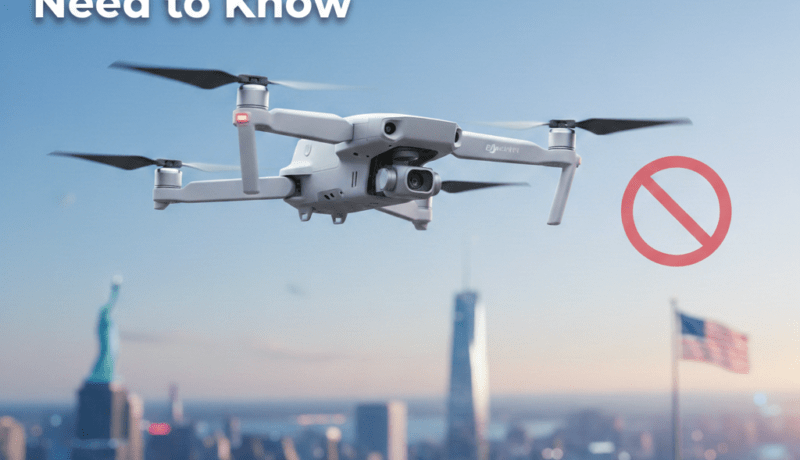

DJI drones ban has created confusion for US drone pilots in 2026. Many are asking: Are DJI drones banned, partially restricted, or just politically complicated? The answer isn’t simple. While the US Department of Commerce withdrew its proposed restrictions on Chinese-made drones, the FCC continues enforcing selective bans on new foreign-made drone models, including DJI.
Table Of Content
- What Changed: Commerce Department vs FCC Rules
- Why DJI Is Still Stuck
- 1. FCC Restrictions Are Still in Place
- 2. Geopolitical Considerations
- 3. Operational Impacts for Drone Pilots and Filmmakers
- What the FCC Ban Blocks
- What the FCC Ban Does Not Block
- Temporary Exemptions
- FCC Drone Ban: What It Actually Blocks and What It Doesn’t
- What the FCC Ban Blocks
- What the FCC Ban Does Not Block
- Temporary Exemptions
- Practical Advice for Drone Pilots in 2026
- 1. Do This: Stay Informed and Document Your Fleet
- 2. Do This: Plan for Future Replacements
- 3. Avoid This: Panic Buying or Ignoring Rules
- 4. Otherwise You’ll Face These Problems
- 5. Extra Tips for Filmmakers
- Key Questions That Remain About the DJI Ban
- 1. Will Conditional Approvals Become More Common?
- 2. Will the 65% Domestic Content Rule Last?
- 3. How Will US-China Trade Talks Affect Drone Policy?
- 4. Could Legal Challenges or Negotiations Change Enforcement?
- My Advice
As someone guiding drone operators and filmmakers, I want to break down this complex policy situation clearly. You’ll learn what changed, what stayed the same, and how it affects your current and future drone fleet.
Here’s what we’ll cover in this guide:
- How Commerce Department and FCC rules differ
- Which DJI drones are still legal to use
- Practical advice for filmmakers, hobbyists, and professional operators in 2026
By understanding this, you can make confident decisions about your drone fleet, avoid operational headaches, and stay compliant with US regulations.
What Changed: Commerce Department vs FCC Rules
In late 2025, US drone regulations caused a lot of confusion. The Commerce Department initially proposed restrictions on Chinese-made drones, which could have severely limited DJI’s operations in the US. However, the department withdrew its proposal, leaving the FCC as the main authority enforcing drone restrictions.
Here’s the breakdown:
Commerce Department Withdrawal:
- The proposal aimed to restrict core systems in drones, including onboard computers, communication links, flight control systems, and data storage.
- If enforced, even existing DJI drones could have become illegal to operate.
- Public feedback from drone pilots, small businesses, and safety agencies showed overwhelming concern, highlighting the potential disruption to professional operators.
- On December 19, 2025, the department pulled the proposal entirely, signaling a less disruptive approach.
FCC Enforcement:
- On December 22, 2025, the FCC added foreign-manufactured drones and critical components to its Covered List.
- This effectively blocks new DJI models and other foreign-made drones from being sold in the US, but existing authorized models remain legal.
- The FCC also updated the Covered List on January 7, 2026, introducing exemptions for drones on the Department of Defense’s Blue UAS Cleared List and those meeting a 65% domestic content standard.
Why this matters for drone operators:
- The Commerce Department’s plan was the “nuclear option”. Its withdrawal avoided major disruptions for filmmakers and hobbyists who rely on DJI drones.
- The FCC’s rules are targeted and specific, allowing current fleets to operate while controlling future imports.
Why DJI Is Still Stuck
Even after the Commerce Department withdrew its extreme restrictions, DJI remains in a complicated position in the US market. The situation isn’t just about legal rules — it’s about geopolitics, trade leverage, and timing.
Here’s why DJI is still facing challenges:
1. FCC Restrictions Are Still in Place
While the Commerce Department stepped back, the FCC continues enforcing its Covered List rules. This means:
- New DJI models cannot get FCC equipment authorization, so they cannot be sold or imported in the US.
- Existing fleets remain legal, but replacement parts and new models may be harder to obtain.
- This creates a pipeline issue for filmmakers relying on DJI hardware for upcoming projects.
2. Geopolitical Considerations
- Decisions on drones are influenced by US-China trade negotiations.
- Reports suggest the withdrawal was partly tied to the Trump–Xi summit in April 2026, aimed at preventing unnecessary tensions.
- This shows that DJI’s situation is as much about diplomatic leverage as it is about national security.
3. Operational Impacts for Drone Pilots and Filmmakers
- Repair and maintenance: Access to replacement parts could be limited in the future.
- Upgrades: New features and safety updates may only be available for approved models.
- Planning fleet expansion: Filmmakers and hobbyists may need to consider alternative drone options.
FCC Drone Ban: What It Actually Blocks and What It Doesn’t
The FCC drone ban often sounds scarier than it really is. Many US drone pilots hear “DJI drones banned” and assume all operations are immediately illegal. That’s not the case. Understanding what the FCC rules actually do is crucial for filmmakers, hobbyists, and professional operators.
What the FCC Ban Blocks
- New foreign-made drones cannot receive FCC equipment authorization. This directly affects DJI, Autel Robotics, HoverAir, and other foreign manufacturers.
- New critical components from foreign manufacturers cannot be certified.
- Future DJI models without prior FCC approval are effectively barred from US sales.
What the FCC Ban Does Not Block
- Existing DJI drones remain legal to fly. Your current fleet is safe.
- Previously authorized DJI models can still be sold and purchased.
- No current fleet is being grounded. You can continue filming and operating without immediate disruption.
Temporary Exemptions
On January 7, 2026, the FCC updated its Covered List with temporary exemptions:
- Drones on the Department of Defense’s Blue UAS Cleared List
- Drones meeting a 65% domestic content standard
- Individual products that receive conditional approvals
These exemptions provide some flexibility but highlight that future DJI models may be limited, so planning your fleet is important.
Mentor Advice:
If you are a filmmaker or content creator, keep track of which DJI models are approved and consider Best Drones for Filmmaking 2026 to explore models that remain fully accessible in the US market.If you rely on DJI drones, plan ahead. Don’t wait until your fleet is outdated — consider your current and future models carefully, and check the Best Drones for Filmmaking 2026 guide for alternatives and planning your fleet strategy.
FCC Drone Ban: What It Actually Blocks and What It Doesn’t
The FCC drone ban often sounds scarier than it really is. Many US drone pilots hear “DJI drones banned” and assume all operations are immediately illegal. That’s not the case. Understanding what the FCC rules actually do is crucial for filmmakers, hobbyists, and professional operators.
What the FCC Ban Blocks
- New foreign-made drones cannot receive FCC equipment authorization. This directly affects DJI, Autel Robotics, HoverAir, and other foreign manufacturers.
- New critical components from foreign manufacturers cannot be certified.
- Future DJI models without prior FCC approval are effectively barred from US sales.
What the FCC Ban Does Not Block
- Existing DJI drones remain legal to fly. Your current fleet is safe.
- Previously authorized DJI models can still be sold and purchased.
- No current fleet is being grounded. You can continue filming and operating without immediate disruption.
Temporary Exemptions
On January 7, 2026, the FCC updated its Covered List with temporary exemptions:
- Drones on the Department of Defense’s Blue UAS Cleared List
- Drones meeting a 65% domestic content standard
- Individual products that receive conditional approvals
These exemptions provide some flexibility but highlight that future DJI models may be limited, so planning your fleet is important.
If you are a filmmaker or content creator, keep track of which DJI models are approved and consider Best Drones for Filmmaking 2026 to explore models that remain fully accessible in the US market.
Practical Advice for Drone Pilots in 2026
As a US drone pilot or filmmaker, it’s not enough to just know the rules — you need practical guidance on how to operate safely, plan your fleet, and avoid disruptions. Here’s my mentor-style advice based on the current DJI drones ban 2026 and FCC regulations.
1. Do This: Stay Informed and Document Your Fleet
- Check FCC approvals regularly for all drones you own.
- Keep a record of your drone models, purchase dates, and serial numbers. This helps if regulations change suddenly.
- Follow reliable sources like FCC Covered List and FAA updates to stay compliant.
2. Do This: Plan for Future Replacements
- If your fleet relies heavily on DJI, consider alternative drones that are FCC-approved and commercially available in the US.
- Use our Best Drones for Filmmaking 2026 guide to identify models that meet current regulations.
- Start planning upgrades before your fleet becomes outdated, especially for professional filming needs.
3. Avoid This: Panic Buying or Ignoring Rules
- Don’t buy DJI models purely out of fear of a ban. New restrictions might not affect existing drones.
- Avoid using unauthorized or uncertified foreign components, as that could violate FCC rules and result in fines.
4. Otherwise You’ll Face These Problems
- Inability to replace or repair your drones if a model is restricted in the future.
- Legal issues from using non-approved hardware in professional projects.
- Operational disruptions during filming or commercial drone services.
5. Extra Tips for Filmmakers
- Check insurance coverage for your drone fleet — some policies may exclude drones on restricted lists.
- Track software updates and safety patches. Even authorized drones could lose functionality if future rules change.
- Consider hybrid fleets, mixing DJI with alternative brands to minimize risk.
Key Questions That Remain About the DJI Ban
Even after the Commerce Department withdrew its proposal and the FCC rules are in place, several critical questions remain. Understanding these will help you as a drone pilot or filmmaker plan ahead and avoid surprises.
1. Will Conditional Approvals Become More Common?
The FCC has started granting conditional approvals for certain drone models. It’s unclear if this will expand, allowing more DJI or foreign-made drones to operate legally in the US. Keeping an eye on these approvals ensures you don’t miss opportunities for fleet expansion.
2. Will the 65% Domestic Content Rule Last?
Some drones are exempted if they meet a 65% domestic content requirement. This rule is currently set until January 1, 2027. If it changes, it could impact which drones are eligible for sale and operation.
3. How Will US-China Trade Talks Affect Drone Policy?
The recent Trump–Xi summit shows that drones are part of broader geopolitical negotiations. Future policy adjustments could happen based on trade agreements or diplomatic decisions, so staying updated is essential.
4. Could Legal Challenges or Negotiations Change Enforcement?
Multiple agencies, including the FCC and Commerce Department, are involved. Ongoing legal challenges or behind-the-scenes negotiations could alter rules, exemptions, or enforcement timelines. Filmmakers relying heavily on DJI drones should plan for multiple scenarios.
My Advice:
- Stay informed via official sources like the FCC Covered List.
- Maintain flexibility in your fleet, considering both DJI and alternative brands.
- Plan upgrades and replacements before your current fleet faces restrictions.



No Comment! Be the first one.