Do You Need Drone Insurance in USA? Here’s What I Found Out in 2026

If you’re asking “do you need drone insurance in USA,” you’re already thinking smarter than most new drone owners I come across.
Here’s the honest answer: it depends on how you fly, where you fly, and why you fly.

But let me be clear — “it depends” is not an excuse to skip this topic. I’ve seen hobbyists lose thousands of dollars after a single bad flight. I’ve seen commercial pilots lose contracts because they didn’t carry the right coverage. And I’ve seen beginners assume their homeowner’s policy would cover a drone crash — it usually doesn’t.
In 2026, the drone space in the USA is more regulated than ever. The FAA is stricter. Venues and clients demand proof of insurance before you even set foot on a job site. And the cost of a single liability incident can wipe out months of income.
So whether you fly a $200 beginner drone on weekends or operate a professional rig under Part 107, this guide will tell you exactly what you need, what you can skip, and what will cost you if you get it wrong.
I also put together a full breakdown of drone insurance requirements in the USA if you want to go deeper on the legal side after reading this.
Let’s get into it.
What Is Drone Insurance and What Does It Actually Cover?
Before you decide whether you need it, you need to understand what drone insurance actually is — because a lot of people confuse it with device warranties or manufacturer protection plans.
Drone insurance is not the same as DJI Care Refresh. That covers accidental damage to your own drone. Insurance covers damage you cause to other people, other property, and in some cases, your own equipment too.
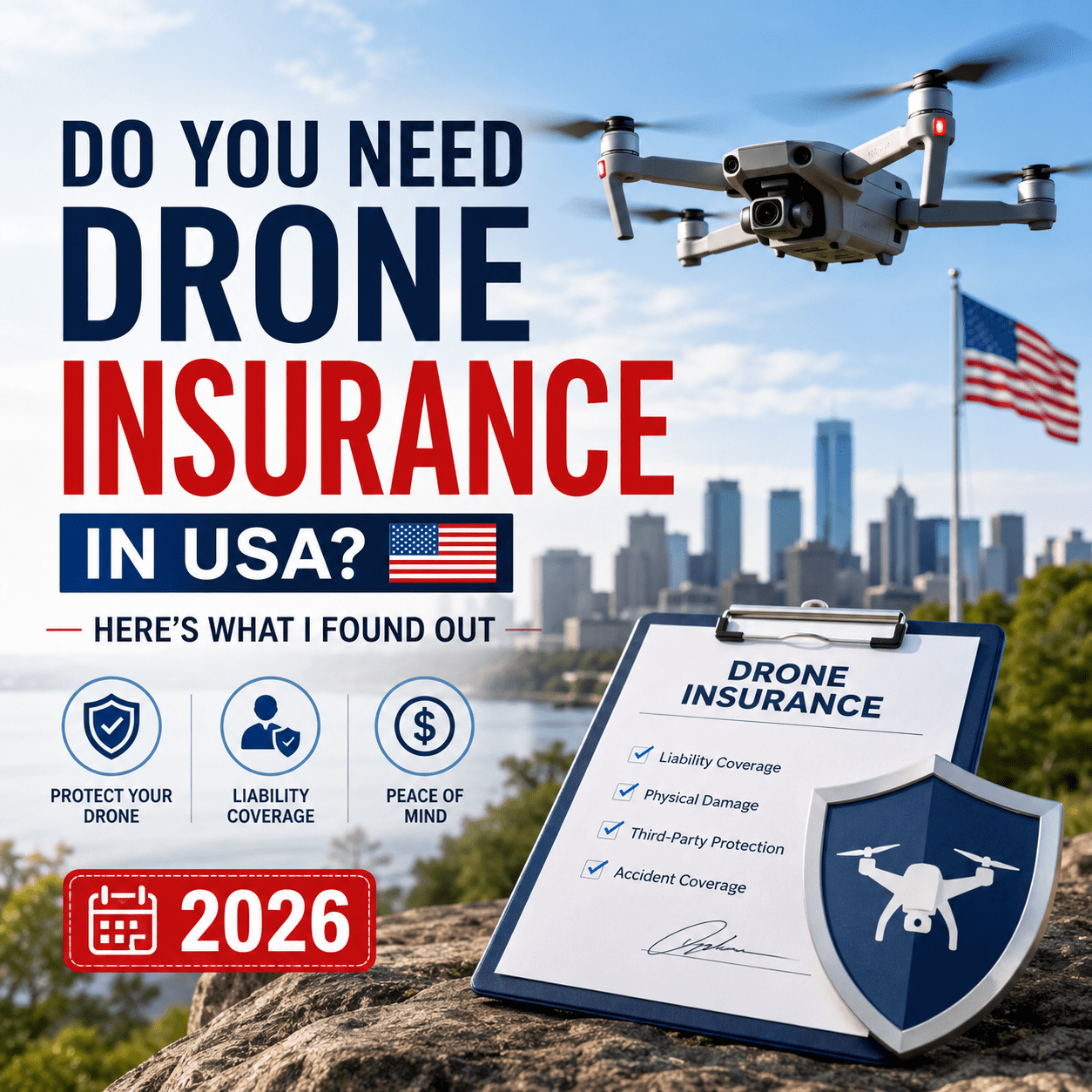
Here is what a standard drone insurance policy in the USA typically covers:
Liability Coverage This is the most important one. If your drone crashes into someone’s car, a building, or injures a bystander, liability coverage pays for the damages. Without it, that bill comes out of your pocket — and drone accidents can get expensive fast.
Hull Coverage This covers physical damage to your own drone. If you crash it, it gets stolen, or it malfunctions and falls out of the sky, hull coverage handles the repair or replacement cost.
Payload Coverage If you carry a camera, thermal sensor, or any other equipment attached to your drone, payload coverage protects that gear separately from the hull.
Personal Injury Coverage Some policies include coverage if someone claims your drone invaded their privacy or caused them harm in a non-physical way.
What It Does Not Cover
- Intentional damage
- Flying in restricted airspace
- Operating without FAA registration
- Races or competitive events (unless specifically added)
If you are still comparing drone insurance against a manufacturer protection plan, I have a full breakdown in this post on drone insurance vs DJI Care — it will clear up the confusion completely.
The bottom line here is simple. Insurance protects other people and property from you. Warranties protect your drone from itself. You may need both, but they are not interchangeable.
Is Drone Insurance Required by Law in the USA?
This is the question most people actually want answered. And the honest answer is: not federally — but that does not mean you are free to skip it.
Let me break this down clearly.
Federal Law (FAA)
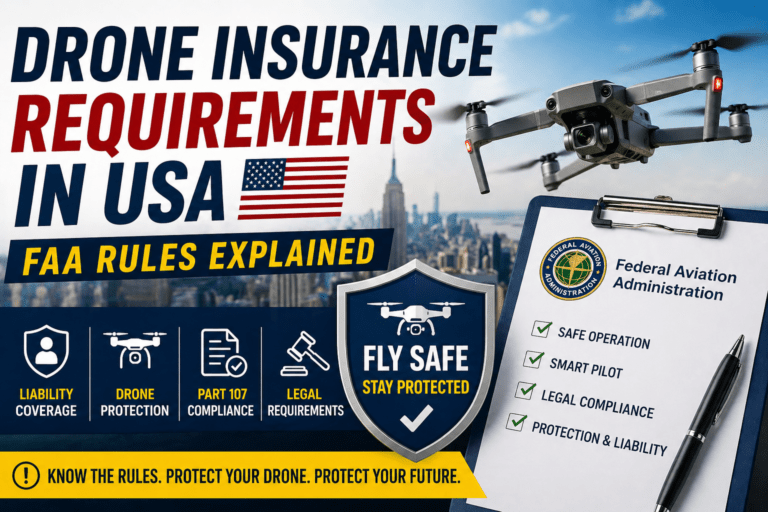
As of 2026, the FAA does not legally require drone insurance for recreational or commercial pilots at the federal level. What the FAA does require is drone registration and, for commercial pilots, a Part 107 certification.
But here is where people make a costly mistake. Just because the federal government does not mandate insurance does not mean you are protected without it. It just means no one is checking your policy at the door — until something goes wrong.
State and Local Laws
Several US states and municipalities have their own drone regulations that go beyond federal rules. Some local governments require proof of liability insurance before you can fly in certain areas. This is especially common in:
- State parks
- Public events
- Urban airspace zones
- Near airports or helipads
If you want a full picture of where these rules apply, I recommend reading through the drone laws in the USA — it covers state-by-state breakdowns that are relevant in 2026.
Client and Venue Requirements
This is the part that catches commercial pilots off guard. Even if no law requires insurance, your clients will. If you shoot real estate photography, weddings, construction progress, or any paid work, the person hiring you will almost always ask for a certificate of insurance before the job starts.
I have talked to drone pilots who lost high-paying contracts simply because they could not produce proof of coverage on the spot. That is a painful and completely avoidable situation.
The Real Risk of Flying Without Insurance
If your drone causes property damage or injures someone and you have no insurance:
- You pay all legal and repair costs out of pocket
- You can be sued personally
- Your personal assets are at risk
- Your reputation as a professional operator takes a serious hit
Flying without insurance is not illegal at the federal level. But it is a financial gamble that very few pilots can afford to lose.
For a deeper look at exactly what the law says about coverage requirements, check out this post on drone insurance requirements in the USA — it covers what is legally required versus what is strongly recommended.
Do Hobbyists Need Drone Insurance in USA?
A lot of recreational flyers assume they are in the clear because they are not making money from their drone. That assumption is wrong and it has cost people a lot of money.
Let me explain why.
Your Homeowner’s Policy Probably Does Not Cover It
Most people I talk to assume their homeowner’s or renter’s insurance will cover a drone incident. In most cases it will not — at least not fully. Some policies exclude unmanned aircraft entirely. Others cap coverage at a level that would not come close to covering a serious liability claim.
Before you assume you are covered, call your insurance provider and ask directly. Get the answer in writing.
Recreational Does Not Mean Risk-Free
Just because you fly for fun does not mean your drone cannot cause serious damage. A hobbyist drone crashing into a crowd at a park, hitting a car, or damaging someone’s property creates the exact same liability as a commercial incident. The drone does not know you were not getting paid.
Here is what recreational flyers actually face without insurance:
- Full out-of-pocket cost for property damage
- Personal liability if someone is injured
- Legal fees if the other party decides to sue
- No support if your drone is stolen or lost
When Hobbyist Insurance Makes Sense
You should seriously consider drone insurance as a recreational flyer if you:
- Fly regularly (more than a few times per month)
- Fly near people, vehicles, or buildings
- Own a drone worth more than $300
- Fly in public spaces or parks
- Attend drone meetups or flying events
If you are just starting out and flying a budget drone in open fields away from people, your risk level is lower. But even then, accidents happen in unexpected places.
If you are new to all of this, I put together a beginner-friendly guide on drone insurance for beginners that walks you through the basics without overwhelming you with technical language.
What Does Hobbyist Drone Insurance Actually Cost?
This is usually the first question recreational flyers ask once they realize they need coverage. The good news is that hobby drone insurance is not expensive. On-demand policies can cost as little as $10 to $15 per day. Annual plans for hobbyists start around $100 per year depending on coverage limits.
I cover exact pricing in detail in the drone insurance cost guide for 2026 — worth checking before you decide which type of policy fits your flying habits.
The bottom line for hobbyists is this. You are not required to carry insurance. But one bad flight without it can cost you far more than a full year of coverage ever would.
Do Commercial Drone Pilots Need Drone Insurance in USA?
If you are flying commercially, this is not even a question you should be debating. As a commercial drone pilot operating drone insurance in USA is something you need before you take on your first paid job — not after something goes wrong.
Let me walk you through why.
Clients Will Ask for It Before You Even Show Up
I have spoken with dozens of commercial drone operators across the USA. Every single one of them confirmed the same thing. The moment you start doing paid work, clients ask for a certificate of insurance. Real estate agencies, construction companies, film production studios, event organizers — they all require it.
If you cannot produce proof that you carry drone insurance in USA, you do not get the job. It is that simple.
Part 107 Pilots Face Higher Liability
If you hold a Part 107 certification and fly for compensation, your exposure to liability is significantly higher than a hobbyist. You are operating in more complex environments — near buildings, over private property, around people. The potential for damage is real and the dollar amounts involved can be serious.
A commercial drone insurance policy in the USA typically covers:
- Third-party bodily injury
- Third-party property damage
- Legal defense costs
- Payload and equipment coverage
- Non-owned drone liability (if you fly someone else’s drone for work)
Industries That Require Drone Insurance in USA
Across the country, these industries consistently require proof of coverage before any drone work begins:
- Real estate photography and videography
- Construction site monitoring
- Agricultural surveying
- Film and television production
- Infrastructure inspection
- Emergency response and search operations
If you work in any of these fields and you are flying without coverage, you are one incident away from losing your business entirely.
On-Demand vs Annual Policy — Which One Is Right for You?
Commercial pilots who fly regularly are almost always better off with an annual policy. It works out cheaper per flight, gives you continuous coverage, and looks more professional when you hand a certificate to a client.
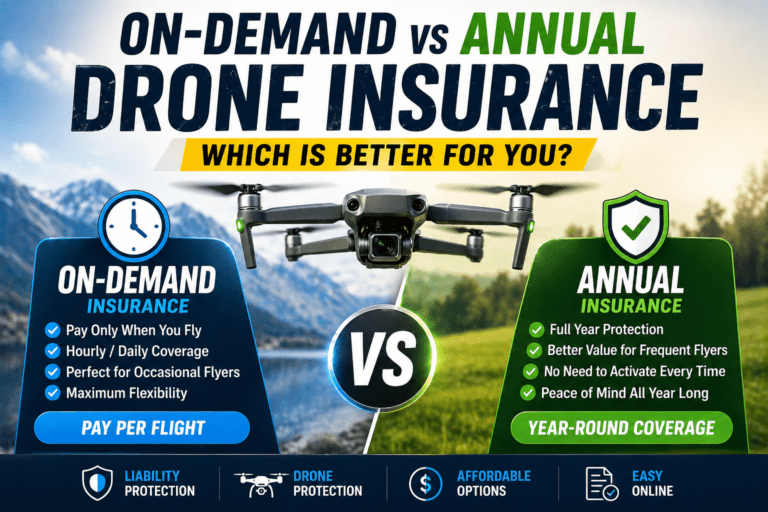
If you only take occasional jobs, an on-demand policy gives you flexibility without locking you into a yearly commitment. I broke down the full comparison in this post on on-demand drone insurance vs annual plans — it will help you figure out which structure makes financial sense for your workload.
For a complete guide built specifically around business use cases, the drone insurance for business guide covers everything from policy types to what coverage limits commercial clients typically expect.
The reality is straightforward. If you are making money with a drone in the USA, drone insurance is not optional in practice — even if it is not mandated by federal law. Your income, your reputation, and your business depend on having the right coverage in place.
How Much Does Drone Insurance Cost in the USA in 2026?
This is the section most people scroll to first. And I get it — before you commit to anything, you want to know what drone insurance in USA is actually going to cost you.
The good news is that drone insurance in USA is more affordable than most people expect. The bad news is that pricing varies a lot depending on how you fly, what you fly, and what coverage limits you need.
Here is a realistic breakdown.
On-Demand Drone Insurance
On-demand policies are bought per flight or per day. They are ideal for hobbyists who fly occasionally or commercial pilots who only take jobs a few times a month.
- Average cost: $10 to $25 per day
- Coverage limit: typically $1 million liability
- Best for: recreational flyers, occasional commercial jobs
- Popular providers: Verifly, SkyWatch.ai
Annual Drone Insurance
Annual policies give you continuous coverage for a full year. For anyone flying regularly, this is almost always the more cost-effective option.
- Hobbyist annual plans: $100 to $200 per year
- Commercial annual plans: $500 to $1,500+ per year
- Coverage limits: $1 million to $10 million depending on policy
- Best for: Part 107 pilots, frequent flyers, business operators
What Affects the Price
Several factors push your premium up or down:
- Drone value — more expensive drones cost more to insure
- Coverage limits — higher liability limits mean higher premiums
- Flight frequency — more flights equal more risk exposure
- Pilot experience — some insurers reward certified pilots with lower rates
- Location — flying in dense urban areas carries more risk
- Payload — carrying expensive camera equipment adds to the cost
Is Cheap Drone Insurance Worth It?
I always tell people the same thing. Do not choose drone insurance in USA based on price alone. A policy that saves you $50 per year but leaves you with a $500,000 coverage gap is not a deal — it is a liability.
Read the exclusions carefully. Understand what is and is not covered before you buy. A cheap policy that does not cover the situation you actually find yourself in is worthless.
For a full breakdown of pricing across the top providers and what you actually get for your money, the drone insurance cost guide for 2026 is the most detailed resource I have put together on this topic.
And if you are ready to compare the best options available right now, the best drone insurance in 2026 guide ranks the top providers with honest pros and cons for each one.
Understanding the cost is one thing. Choosing the right policy is another. Take the time to do both correctly and you will never have to worry about being caught without coverage at the wrong moment.
Frequently Asked Questions
Do You Need Drone Insurance in USA? – Everything Answered for 2026
Drone Insurance Questions
Is drone insurance required by law in the USA in 2026?
The FAA does not require drone insurance at the federal level in 2026. However, many states, local governments, and private venues require proof of liability coverage before you can fly. Commercial clients almost always demand it too. Not having drone insurance in the USA is legal — but it is a serious financial risk.
Do hobbyists need drone insurance in the USA?
Recreational flyers are not legally required to carry drone insurance in the USA. But if your drone crashes into someone’s property or injures a person, you are personally liable for all damages. Hobby drone insurance starts at around $100 per year — which is far cheaper than one accident claim. See our drone insurance for beginners guide for more details.
What does drone insurance in the USA typically cover?
Most drone insurance policies in the USA cover third-party liability, property damage, bodily injury, and legal defense costs. Some policies also include hull coverage for your own drone and payload coverage for attached camera equipment. Always read the exclusions before purchasing.
Does homeowner’s insurance cover drone accidents in the USA?
In most cases, no. Many homeowner’s and renter’s insurance policies in the USA either exclude drones entirely or provide very limited coverage. You should call your insurance provider and ask specifically about unmanned aircraft. Get the answer in writing before relying on it.
How much does drone insurance cost in the USA in 2026?
On-demand drone insurance in the USA costs around $10 to $25 per day. Annual hobbyist plans start at roughly $100 per year. Commercial annual policies range from $500 to $1,500 or more depending on coverage limits and flight frequency. Check our full drone insurance cost guide for 2026 for a detailed breakdown.
Is drone insurance different from DJI Care Refresh?
Yes. DJI Care Refresh covers accidental damage to your own drone. Drone insurance in the USA covers damage you cause to other people and property. They serve different purposes and many serious pilots carry both. Read our drone insurance vs DJI Care comparison to understand which one you actually need.
Buying Questions
What is the best drone insurance in the USA in 2026?
The best drone insurance in the USA depends on how you fly. For recreational flyers, on-demand options like Verifly and SkyWatch.ai are popular. For commercial pilots, annual policies from providers like BWI Aviation Insurance or Thimble offer stronger coverage. See our full best drone insurance guide for 2026 for honest rankings.
Should I get on-demand or annual drone insurance in the USA?
If you fly more than two or three times per month, an annual policy almost always works out cheaper. On-demand policies make sense for occasional flyers or pilots who want flexibility for specific jobs. We break down the full cost comparison in our on-demand vs annual drone insurance guide.
Do I need drone insurance before buying a drone in the USA?
You do not need insurance before purchasing a drone. But you should have coverage in place before your first flight — especially if you plan to fly near people or property. If you are still choosing a drone, check out our best drones for beginners guide to find the right starting point.
Financing Questions
Can I finance a drone and still get insurance in the USA?
Yes. Financing a drone does not affect your ability to get drone insurance in the USA. Many pilots finance their equipment and carry insurance at the same time. If you are exploring financing options, our drone financing guide for 2026 covers everything you need to know.
Does drone financing require insurance in the USA?
Some drone financing agreements may require you to carry hull or equipment insurance to protect the asset while it is still being paid off. Always read your financing contract carefully. If credit is a concern, check out our guide on drone financing with no credit check for alternative options.
Final Thoughts: Do You Need Drone Insurance in the USA in 2026?
Let me give you the straight answer I wish someone had given me when I first started flying.
Yes — you need drone insurance in the USA. Maybe not by federal law. But by every practical measure that actually matters.
If you fly recreationally, one accident near people or property can cost you more than years of insurance premiums combined. If you fly commercially, no serious client will hire you without a certificate of insurance. And if you are financing an expensive drone, losing it without coverage means you are still making payments on something that no longer exists.
The question was never really “do you need drone insurance in the USA.” The real question is how much risk you are willing to carry every single time you launch.
Here is what I recommend based on where you are right now:
If you are a hobbyist: Start with an affordable annual plan. It costs less than a single replacement propeller set and gives you peace of mind on every flight. The drone insurance for beginners guide is the right place to start.
If you are a commercial pilot: Get an annual liability policy before you take your next paid job. Make sure your coverage limits match what your clients expect. The drone insurance for business guide will walk you through exactly what you need.
If you are still comparing options: Read the best drone insurance guide for 2026 and the drone insurance cost breakdown side by side. Between those two posts you will have everything you need to make a confident decision.
If you are unsure about legal requirements in your state: The drone insurance requirements in the USA post covers exactly what is legally required versus what is strongly recommended — state by state.
Drone insurance in the USA in 2026 is not expensive. It is not complicated. And it is absolutely worth having before something goes wrong rather than after.
Fly smart. Protect yourself. And do not let one bad flight undo everything you have built.
Have a question about drone insurance in the USA that I did not cover here? Drop it in the comments and I will answer it directly.