
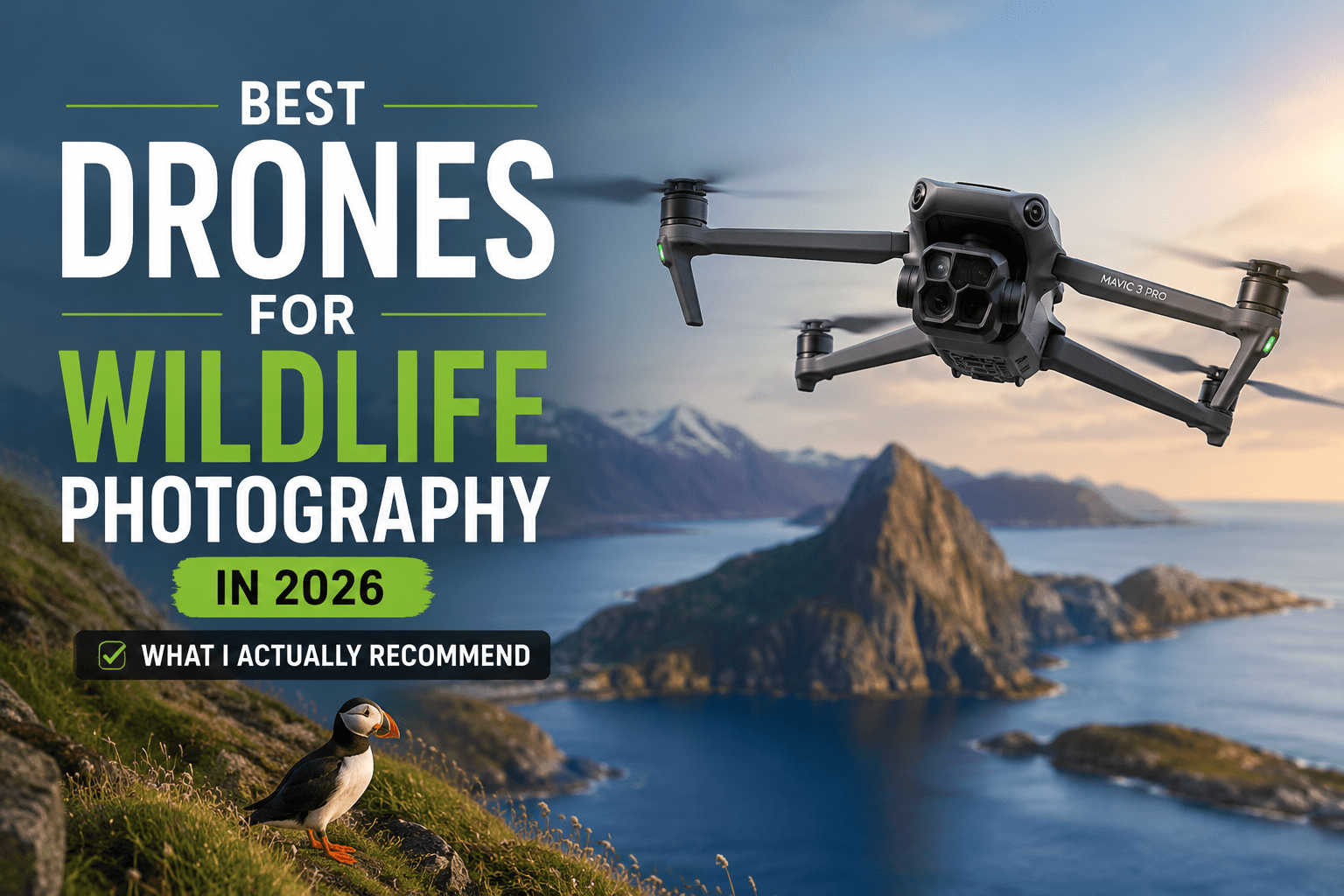

If you are searching for the best drones for wildlife photography in 2026, I want to be straight with you from the start — this is one of the most demanding niches in drone photography, and most guides online completely miss what actually matters in the field.
Table Of Content
- What Makes a Drone Good for Wildlife Photography?
- Best Drones for Wildlife Photography in 2026
- 1. DJI Mavic 3 Pro — Best Overall for Wildlife Photography
- 2. DJI Air 3S — Best Mid-Range Option for Wildlife
- 3. DJI Mini 4 Pro — Best Quiet Option for Sensitive Wildlife Areas
- 4. Autel EVO II Pro V3 — Best Non-DJI Option for Wildlife
- 5. DJI Mavic 3 Classic — Best Single-Camera Option for Field Work
- Drone Laws You Must Know Before Photographing Wildlife in the USA
- Battery Life for Wildlife Photography — Why It Changes Everything
- Do You Need Insurance for Wildlife Drone Photography?
- Can You Finance a Wildlife Photography Drone?
- Frequently Asked Questions
- Final Thoughts: Choosing the Best Drone for Wildlife Photography in 2026
Wildlife photography is not like shooting real estate or landscapes. You are dealing with unpredictable subjects, remote locations, restricted airspace near protected areas, and situations where one wrong move means you either miss the shot or disturb the animal entirely. I have seen photographers spend $1,500 on a drone only to realize it is too loud, too slow to respond, or produces blurry images the moment a bird takes flight.
The good news is that drone technology in 2026 has made serious progress in the areas that matter most for wildlife work — quieter motors, longer zoom capability, smarter tracking, and better performance in wind and rough weather.
Before you buy anything, though, there is one thing I always tell wildlife drone photographers: know the rules before you fly. Many of the best wildlife locations in the USA — national parks, wildlife refuges, protected wetlands — have strict drone regulations or outright bans. Read through the drone laws in the USA before you plan any shoot near protected land. Getting this wrong can cost you a fine and a confiscated drone.
Also, if you are shooting wildlife professionally — for magazines, documentaries, or paid clients — you need to look at your liability coverage. I have a full breakdown of whether you need drone insurance in the USA that applies directly to outdoor and nature photography work.
Now let’s get into what makes a drone actually work for wildlife photography.
What Makes a Drone Good for Wildlife Photography?
Wildlife photography has a very specific set of demands that are different from almost every other drone use case. Here is what I look at when I evaluate a drone for this purpose:
Noise level: This is the number one factor that most buyers overlook. A loud drone will spook animals from 200 meters away. Quieter propeller designs and lower RPM motors make a real difference. Avoid drones that buzz loudly — they are useless for anything that moves.
Zoom capability: You cannot fly close to most wildlife without disturbing them. A drone with optical or hybrid zoom lets you keep your distance and still get a usable frame. Without zoom, you are either too far away for a good shot or close enough to cause a disturbance.
Subject tracking: Wildlife moves. Fast. ActiveTrack or equivalent AI-based subject tracking is not a luxury for wildlife photographers — it is a requirement. Manual tracking of a bird in flight at 40mph is nearly impossible.
Flight time: Wildlife photography involves a lot of waiting. You find your subject, hold position, and wait for the right moment. Short battery life kills that process. I look for 35+ minutes of real-world flight time minimum.
Wind stability: Remote wildlife areas are often windy — coastal cliffs, open plains, mountain ridges. A drone that drifts in wind produces shaky, unusable footage. Look for strong wind resistance ratings and check real-world reviews, not just specs.
Camera quality: A large sensor with good dynamic range handles the high-contrast lighting common in nature settings — bright skies against dark forest floors, animals in shadow. RAW file support is important if you plan to edit seriously.
Portability: Wildlife shoots often mean long hikes to remote locations. A drone that folds into a compact package and fits in a daypack is a practical advantage over a heavy, bulky unit.
If you are also considering using your drone for other types of nature content, my post on drones for videos and photos covers a broader range of use cases that overlap well with wildlife work.
Best Drones for Wildlife Photography in 2026
1. DJI Mavic 3 Pro — Best Overall for Wildlife Photography

The DJI Mavic 3 Pro is the most capable consumer drone for wildlife photography available in 2026. It combines a Hasselblad primary camera with three focal lengths, giving you the flexibility to keep distance from your subject and still compose a strong frame.
Key Features:
- 4/3-inch Hasselblad primary sensor
- Triple camera: 24mm, 70mm, 166mm equivalent focal lengths
- 43-minute flight time
- APAS 5.0 omnidirectional obstacle avoidance
- Advanced subject tracking (ActiveTrack 5.0)
- 10-bit D-Log M color profile
- Wind resistance up to 43.5 mph (Level 6)
Pros:
- 166mm equivalent telephoto lets you shoot from a safe distance without disturbing animals
- Hasselblad color science handles complex natural lighting better than any competitor at this price
- Strong wind resistance — holds steady in coastal and open terrain conditions
- ActiveTrack 5.0 can lock onto moving subjects reliably
- 43-minute flight time gives you real patience in the field
Cons:
- Over $2,000 — a significant investment
- Heavier than the Air or Mini series — longer hikes feel it
- Motor noise is audible — not the quietest option in the lineup
Price range: $2,199–$2,799
Best for: Professional wildlife photographers, documentary filmmakers, nature content creators
My honest take: If you are serious about wildlife photography and budget is not the primary constraint, this is the drone to get. The 166mm telephoto alone justifies a large part of the price — it changes the way you approach subjects entirely. You stop worrying about how close you can get and start thinking purely about composition.
2. DJI Air 3S — Best Mid-Range Option for Wildlife

The DJI Air 3S is my top recommendation for photographers who want serious wildlife capability without the Mavic 3 Pro price tag. The 1-inch sensor with a wide aperture, combined with the dual-camera system, gives you a lot of flexibility in real field conditions.
Key Features:
- 1-inch CMOS primary sensor, f/1.7 aperture
- Dual camera: 24mm wide and 70mm medium tele
- 4K/60fps video and 50MP stills
- 46-minute advertised flight time (38–40 minutes real-world)
- Omnidirectional obstacle sensing
- ActiveTrack 360 subject tracking
- Wind resistance Level 6
Pros:
- f/1.7 aperture gives exceptional low-light performance — critical for dawn and dusk shoots when animals are most active
- 70mm tele camera keeps useful distance from skittish subjects
- Compact and lighter than the Mavic 3 Pro — easier to carry on hikes
- Excellent flight time for field work
- Strong obstacle avoidance for flying in dense environments
Cons:
- No mechanical shutter — can produce rolling shutter on fast-moving subjects
- 70mm is useful but not as much standoff distance as the Mavic 3 Pro’s 166mm
Price range: $1,099–$1,399
Best for: Enthusiast wildlife photographers, nature YouTubers, outdoor content creators
My honest take: For most wildlife photographers, this is the sweet spot in 2026. The low-light performance is genuinely impressive, and the compact size means you actually take it into the field rather than leaving it home because it is too heavy. The 70mm tele is useful — just do not expect it to replace a proper telephoto for bird-in-flight work.
3. DJI Mini 4 Pro — Best Quiet Option for Sensitive Wildlife Areas
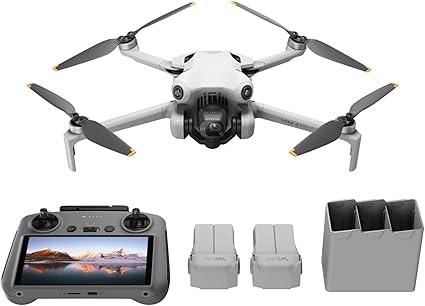
Here is where wildlife photography gets interesting compared to other drone niches. Noise matters more than almost any other spec. The DJI Mini 4 Pro is significantly quieter than larger drones because of its smaller, slower-spinning propellers — and that makes a real difference when you are near animals.
Key Features:
- 1/1.3-inch CMOS sensor
- 4K/60fps, 48MP stills
- 34-minute flight time
- Omnidirectional obstacle avoidance
- 249g — under FAA registration threshold
- ActiveTrack 360
- D-Log M color profile
Pros:
- Quieter motor profile than larger DJI drones — less likely to disturb animals at moderate distances
- Ultra-portable — fits in a jacket pocket for remote hikes
- 249g weight means fewer airspace restrictions in some areas
- Good image quality for standard wildlife documentation
Cons:
- No telephoto — you need to get closer than you would with a zoom camera
- Smaller sensor limits low-light capability compared to 1-inch options
- Struggles in sustained wind above 20 mph
Price range: $759–$959
Best for: Hikers and naturalists who want minimal disturbance, wildlife documentation in calm conditions
My honest take: This drone punches above its weight specifically because of the noise advantage. If you are photographing nesting birds, deer in a meadow, or any animal that startles easily, flying quieter matters more than flying with a bigger sensor. It is not the best camera in this list but it is the most animal-friendly.
4. Autel EVO II Pro V3 — Best Non-DJI Option for Wildlife
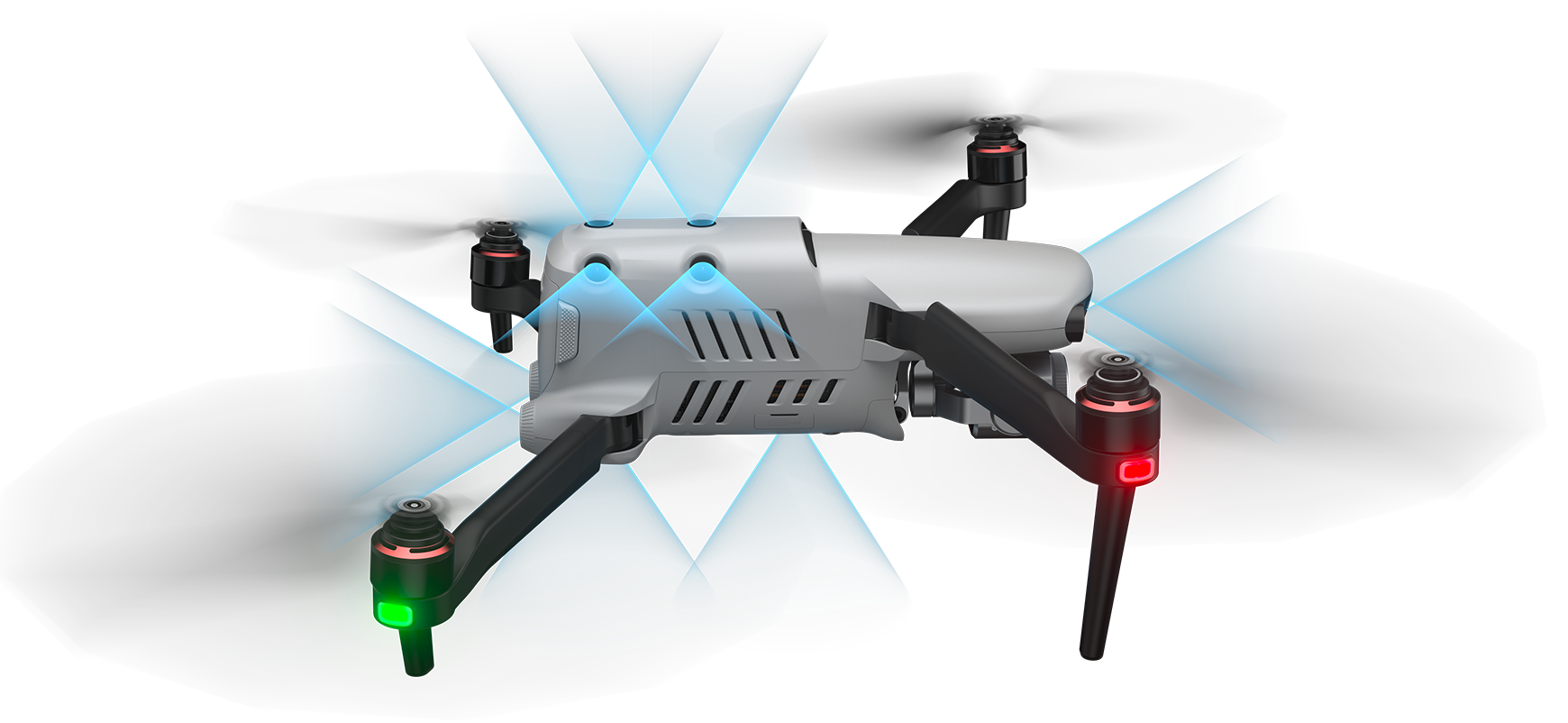
Given where things stand with DJI drone regulations in the USA, some professional wildlife photographers are moving to non-DJI platforms. The Autel EVO II Pro V3 is the most capable alternative for serious field work.
Key Features:
- 1-inch Sony CMOS sensor
- f/2.8–f/11 variable aperture
- 6K photo resolution
- 40-minute flight time
- Obstacle avoidance on three sides
- No mandatory geo-fencing
Pros:
- Variable aperture gives precise exposure control in changing outdoor lighting
- No data privacy concerns or app account requirements
- Excellent build quality for rugged outdoor use
- Strong US-based customer support
Cons:
- No telephoto — fixed wide lens only
- Subject tracking is less refined than DJI’s ActiveTrack system
- App experience is not as polished
Price range: $1,049–$1,299
Best for: Wildlife photographers who need a reliable non-DJI platform with strong image quality
My honest take: The variable aperture is genuinely useful in outdoor shooting where light changes quickly — early morning, golden hour, overcast conditions. If DJI is off your list for any reason, this is the most capable alternative at this price point for wildlife work.
5. DJI Mavic 3 Classic — Best Single-Camera Option for Field Work
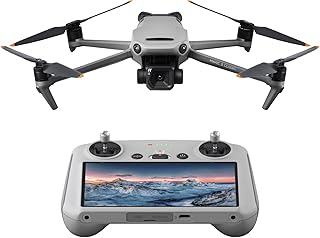
If you want the Hasselblad sensor experience without paying for focal lengths you may rarely use in wildlife work, the Mavic 3 Classic is a strong middle ground. Most wildlife shots are wide or moderate — having the primary Hasselblad camera with a mechanical shutter is the real value here.
Key Features:
- 4/3-inch Hasselblad sensor
- 5.1K video, 20MP stills
- 46-minute flight time
- Omnidirectional obstacle sensing
- Mechanical shutter — eliminates rolling shutter on moving subjects
- Wind resistance Level 6
Pros:
- Mechanical shutter means sharper images of moving animals compared to electronic-only shutters
- Hasselblad dynamic range handles harsh natural light extremely well
- 46-minute flight time is the best in this list for patience-heavy wildlife work
- Priced lower than the Mavic 3 Pro
Cons:
- Single focal length — no telephoto option
- Heavier than the Air 3S
Price range: $1,469–$1,699
Best for: Landscape and habitat photographers, documentary filmmakers who prioritize image quality over zoom reach
My honest take: The mechanical shutter is underrated for wildlife work. When you are photographing a bird landing on water or a deer mid-stride, the mechanical shutter captures the moment cleanly where an electronic shutter can leave you with a warped image. If your wildlife photography is more about habitat and behavior than tight close-ups, this is excellent value.
Drone Laws You Must Know Before Photographing Wildlife in the USA
This section is not optional reading. In the USA, wildlife photography with drones involves a set of legal restrictions that do not exist for most other drone use cases.
National Parks — No Drones Without a Permit: The National Park Service bans drone use in all national parks without a special use permit. That includes Yellowstone, Yosemite, the Grand Canyon, and over 400 other sites. Flying in these areas without a permit can result in a $5,000 fine and criminal charges. Do not assume that because an area looks open it is unregulated.
Wildlife Refuges: The US Fish and Wildlife Service manages over 560 national wildlife refuges. Drone use is prohibited at most of them. A small number allow it with prior permission. Check before you go.
Migratory Bird Treaty Act: Intentionally harassing or disturbing migratory birds with a drone is a federal violation under this act. This includes flying close enough to cause a bird to flush from its nest or feeding area. Courts have interpreted this broadly.
State-Level Rules: Many states have their own restrictions on top of federal rules. California, for example, has specific drone laws that affect wildlife areas and state parks. If you plan to fly in California, read through the drone laws in California before you go.
Part 107 for Commercial Work: If you are being paid to photograph wildlife — for a publication, a documentary, or any client — you need FAA Part 107 certification. My guide on getting a drone license in the USA covers the full process step by step.
The simple rule: always research the specific location before you fly. Do not assume public land means drone-legal land. It rarely does near wildlife.
Battery Life for Wildlife Photography — Why It Changes Everything
Wildlife photography is a waiting game. You find the location, identify the subject, position the drone, and then you wait — for the right light, the right movement, the right moment.
A drone with 20 minutes of real-world battery turns that waiting game into a frustrating sprint. By the time you have positioned correctly and the scene is developing, you are already thinking about landing to swap batteries. That break in concentration and position costs you shots.
I always carry a minimum of three batteries for any serious wildlife session. Even with a 40-minute drone, three batteries gives you up to two hours of field time — which is the minimum for most meaningful wildlife encounters.
Cold weather is another factor. Battery performance drops significantly below 50°F. In mountain or northern US environments, a drone rated for 40 minutes at room temperature might give you 25 minutes in early morning cold. Plan for this. Keep spare batteries in an inside jacket pocket to maintain temperature before use.
If battery life is a primary concern when choosing between models, I have a detailed comparison of drones with long battery life that goes beyond the manufacturer’s advertised numbers into real-world performance data.
Do You Need Insurance for Wildlife Drone Photography?
If you are flying commercially — for a publication, a documentary production, or any paid client — yes, you need insurance. This is not a gray area.
Even for recreational wildlife photography, insurance makes sense if you are flying in remote areas where a crash and retrieval is expensive, or if your equipment is worth more than you can comfortably absorb as a loss. A drone crash in a canyon, on a cliff face, or in a body of water is not always recoverable.
For photographers who fly occasionally for wildlife work, an on-demand policy is a cost-effective option. You pay per day rather than committing to an annual plan. The comparison between these two approaches is covered in detail in my post on on-demand drone insurance vs annual plans — worth reading before you decide which structure fits your shooting schedule.
For anyone doing regular paid work, an annual commercial policy is the right move. My guide on best drone insurance in 2026 ranks the top providers with honest pros and cons for each.
Can You Finance a Wildlife Photography Drone?
The drones I have recommended in this guide range from $759 to over $2,700. For a lot of wildlife photographers — especially those building a freelance practice or starting out — that upfront cost is a real obstacle.
Drone financing has become much more accessible in 2026. Several platforms offer installment plans for camera equipment, and some do not require strong credit history to qualify.
If upfront cost is holding you back, my drone financing guide for 2026 walks through all the available options — from manufacturer financing to third-party lenders — with an honest look at which ones actually make financial sense for photographers.
Frequently Asked Questions
Frequently Asked Questions
Best Drones for Wildlife Photography 2026 — Everything Answered
Final Thoughts: Choosing the Best Drone for Wildlife Photography in 2026
Here is the short version of everything I have covered:
- For professional wildlife photographers: DJI Mavic 3 Pro
- For serious enthusiasts and nature creators: DJI Air 3S
- For quiet, low-disturbance wildlife work: DJI Mini 4 Pro
- For non-DJI users: Autel EVO II Pro V3
- For the best single-camera image quality in the field: DJI Mavic 3 Classic
The best drones for wildlife photography in 2026 are not just the ones with the best cameras. They are the ones that are quiet enough not to disturb your subjects, fast enough to track movement, stable enough to hold position in outdoor conditions, and legal to fly in the areas where wildlife actually lives.
Get your legal situation sorted first — Part 107 certification if you are shooting commercially, proper insurance if your equipment or liability exposure warrants it, and a clear understanding of where you can and cannot fly. Then choose the drone that fits your budget and the type of wildlife work you plan to do.
If you found this guide useful, my post on best drones for real estate photography applies a similar breakdown to a completely different use case — worth reading if you shoot in multiple disciplines or want to compare how drone requirements change across different types of work.
Fly legal. Fly quiet. And give the animals the space they deserve.
Have a question about wildlife drone photography I did not cover here? Drop it in the comments and I will answer it directly.


No Comment! Be the first one.